Posted on: October 9th, 2020 by Birds of Poole Harbour
The uncertainties of winter 20/21 are a struggle we will all face together. To help navigate these testing times, Birds of Poole Harbour is releasing weekly birding features, providing the resources to help you unlock, understand and connect with the harbour’s rich winter birding scene. Each Friday, we’ll release a new article focusing on key winter species, birding hotspots and local insights.
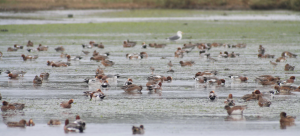
To kickstart your winter birding bug, we’re opening the series with a Birds of Poole Harbour Winter Birding Checklist (download available below). Featuring 160 species (including a couple of distinctive subspecies), the checklist gathers our most familiar residents and common wintering birds, as well as several scarcer seasonal visitors, accompanied with a brief comment on the status of each species in Poole Harbour. Use the checklist, alongside our weekly articles, to hone your winter birding and help you identify new species may not have encountered before or discover more about our fascinating winter visitors. A spectacular twenty-five thousand(!) waders and wildfowl can winter in Poole Harbour, many having bred in Scandinavia, Iceland or even Russia! Desperate to escape the harsh winter conditions further north, thousands of birds choose the comparatively mild climate of Poole Harbour to spend their winter.
But hang on… it isn’t quite winter yet. The rest of October is yet to unfold! Our first few articles will explore the impressive autumn movements of finches and the imminent arrival of our thrushes and crests. So, check in next week when we release our first article examining the oncoming invasion of Redwings and Fieldfares.
We hope this series inspires a connection with the superb birding spectacles Poole Harbour has to offer over the winter, helping you get the same thrills we get out of birding our local area over the coming months. And don’t forget to share your sightings with us! Tag us on social media (Twitter & Facebook), or you can share your sightings via email. Contact hqmanager@birdsofpooleharbour.co.uk with any sightings or identification queries.
Posted on: October 1st, 2020 by Birds of Poole Harbour
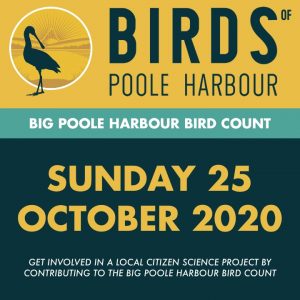
Birds of Poole Harbour is hosting a second Big Poole Harbour Bird Count.
Back in January, Birds of Poole Harbour organised our first Big Poole Harbour Bird Count, generating a wealth of community-led data. You can find our full analysis, as well as exploring species totals and distributions from the big day here. We received 189 submissions in total, collectively counting 63,072 birds of 131 species (including sub-species) across 137 sites in Poole Harbour. After accounting for potential duplications, we estimated total number of birds present in the harbour on 19th January was 48,854(!).
Poole Harbour is an important site for a whole range of species throughout the year. In recognition of this, Birds of Poole Harbour is now coordinating a Big Bird Count four times a year, covering every season. The collation and analysis of this important dataset is then used to generate a comprehensive snapshot of bird species diversity, totals and distribution across the Poole Harbour area in a single day.
How to get involved in this local citizen science project?
Contributing to the Big Bird Count is easy, simply visit your local patches across the Poole Harbour area on Sunday 25th October and share your bird records with us. Use our recording sheet (download available below) to record the bird species and numbers present at your site(s) and share your counts with Birds of Poole Harbour for in-depth analysis. You can also send us your lists via your favoured platform such as BirdTrack or eBird!
All records are valuable. Whether it’s working your local birding patch, or recording the abundance of our familiar garden residents as they become boosted by migrants from mainland Europe for the winter, all records help to formulate the picture of bird population numbers and distribution locally. October is an exciting time of the year, providing opportunities to connect with newly-arrived winter visitors and late-departing summer migrants.
COVID SAFETY
All records are important to us but not as important as yours and other members of the publics health and safety. Please, if you’re heading out for the day to join in the Big Poole Harbour Autumn Bird Count please follow and stick to all current government guidelines and follow site specific rules and regulations. Different nature reserves and areas of land currently have their own rules and procedures in place, so upon arrival make your self aware of route plans, social distancing rules etc to keep your selves and other people safe. Getting out and enjoying the fresh air, the landscape and the birds is a big part of the Big Poole Harbour Bird Count and we can all do our bit to keep stress levels low and each other safe.
Essential information to record
Observer – Name(s) of recorders conducting count (not published in report).
Location – For example Poole Park, Holes Bay south, garden with postcode provided.
Time – Count start and finish times.
Species – Complete checklist of every species you identified during your count(s).
Posted on: September 16th, 2020 by Birds of Poole Harbour
Spring 2020 was without doubt one of the strangest periods in modern times. As lockdown saw us restricted to our homes there were few opportunities to get out and get the nature fix’s so many of us so desperately need. However, little did we know that during April and May a story would unfold that would grip many thousands of us and would provide a welcome distraction from the unfolding news events happening outside our front doors.
With this in mind, we’d like to look back and provide you with an overview of what this seasons Poole Harbour Osprey project meant to us, our friends, our partners and to you…………
Denise Exon Along with a couple of thousand other people I followed CJ7 during lockdown via yourselves and Chris Packham, Megan Mccubbin and The Self Isolating Bird Club. It has been brilliant to share the update re the potential mate for her for next year with the SIBC. I also volunteer at Arne and have seen the ospreys for the first time – absolutely magical. I wish all the ospreys a safe journey and happy over wintering in Africa and will be looking forward to their return next year. Also hope to do a boat trip with yourselves next year.
Louise Cook From the moment CJ7 arrived on the webcam I have been completely hooked. Laptop goes on as soon as I get up in the mornings until last thing at night. I have so enjoyed sharing her exciting times & her day to day life in Poole Harbour this year & I’m so looking forward next year already. Thank you BoPH, I’ve learnt so much! X
Barry Hunt Thanks so much for a brilliant distraction from lockdown. From the moment I first found CJ7 and learned about her life I was hooked and haven’t missed much. I would love to see her interaction with the “Intruders” in the early part of the season included in the video. I am sure the piece above will also be included.
Carol Doling First time I’ve seen the video, how amazing. Brilliant job getting these pictures out to us
Beth Fox Watching CJ7 on the webcam played a significant part in lockdown for me, it was wonderful to watch. I hope to get there next year and come on a boat trip. Looking forward to watching the action next spring. Thank you BOPH.
Margaret Cure Really enjoyed the boat trip seeing the osprey was really exciting also the Marsh Harrier and the Honey Buzzard thanks for a great trip
Gary Cure The BOPH team are such a knowledgeable lot and just really nice dedicated people. Thank you for raising awareness of what is around us and on our doorstep
Diana Doughty Your webcam kept us going during lockdown, we were willing a mate for CJ7 and hope for a positive result next season. The Q&A sessions were great, thank you.
Fran Aldous The webcam was fascinating to watch and we got drawn in to the CJ7 saga. Loved the boat trip we went on too, and the wonderful views we had, not only of ospreys, but also marsh harriers and that amazing honey buzzard!
Jane Jeffs Been really interesting season watching on camera with fingers crossed and especially going the last two weeks and seeing them soaring over the harbour. Thanks for all the information and great project
Karen Daws Have really loved my first season watching these wonderful Ospreys. Can’t wait to see CJ7 among others next season. Thank you BOPH for the opportunity to be a part of it all .
Julie Townshend Hooked on the webcam this year, the lockdown has helped raise awareness of the ospreys here and the U.K. as well as your website. Looking forward to next season
Lesley Broadbent Hoping that CJ7 gets a life mate next year. That will be wonderful.
Janet Biggins The webcam has been wonderful as has CJ7! Such a variety of other visitors too. Fabulous to watch and hear the nightjars! So enjoyable and educational!
Wendy Lewis Sheehan Thank you for all you do. Hopefully CJ7 will stay safe and will find the mate she so deserves next year
Louise Cook Really looking forward to next year & this years webcam had me watching all day (as much as poss), everyday, during lockdown. CJ7 has captured our hearts & I will miss tuning in every day over the Winter. Roll on next year : ) x
Rowena Haley We were really routing for CJ7 hopefully 2021 will be her year bless her
Pauline Stott Yes loved the webcam and looking forward to next year when we might see a breeding pair
Jackie Malley Loved every minute
Alex Bates Yes I’m very excited for 2021
Chris Haribon Awesome as always but a sad year with some of the most well know not returning. As always times move on and some memorable worthy new arrivals , plus some strong new birds we’ll hopefully see back in a couple of years.
Jenny Moore I’ve absolutely loved watching this webcam this year, really got me interested Ospreys and particularly CJ7 with wishing of LS7 joining her back on the nest. She certainly has been an interesting watch, and we can only hope that next year will be the year for success in Poole Harbour. Thank you Birds of Poole Harbour
Posted on: September 9th, 2020 by Birds of Poole Harbour
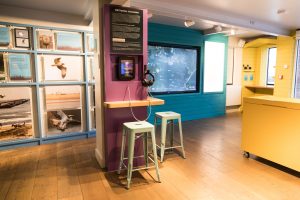
It’s been a long hot and very strange summer. We’ve seen big developments and exciting new storylines evolve with our Osprey translocation project but at the same time, experienced a huge decrease in the amount of people engagement we’ve been able to carry out. We see our public and community work as one of our strongest assets and it’s been so hard not being able to speak with like-minded and enthusiastic people about our work, the harbour and it’s bird life. However, we’re thrilled to announce that with new, safe and logistical measures in place we’re re-opening our HQ on Poole Quay for a trial period with the aim of getting re-open full time over the coming weeks/months. There are obviously still many question marks on how we’ll be able to engage longer term, but we hope that with these new safety measures in place we can provide a welcoming, informative and fresh new space for visitors to come and learn about our work and talk with our team.
Before we open here’s what you’ll need to know:-
Face masks are required at all times
Maintain a 2m distance from staff and other households
Only card payments will be taken (no cash)
Optics demonstrations are available, but we’re currently unable to offer unsupervised testing of binoculars.
Be aware that at busy times, we will restrict the number of people coming into the HQ, so there may be the need to queue.
Only one person or household can use the Quayside hide at one time.
We have reduced interactive activity at the moment, however, we have lovely fresh new interpretation to keep people occupied
It’s a great feeling to know we’ll be able to welcome back the community to our engagement hub on the quay, so until the weekend, stay safe and we look forward to seeing you soon!
Posted on: July 17th, 2020 by Birds of Poole Harbour
Due to the pandemic and the resulting lockdown, our partners at the Roy Dennis Wildlife Foundation have been unable to monitor any of the osprey nests in Scotland this spring. This has meant that until recently we have had no estimates of either the breeding success rate or the hatching dates at the majority of nests (with the exception of those featuring live stream cameras). Knowing the age of chicks at a range of nests is a vital part of the translocation process, as it determines both the timing of collection and selection process. We will only take chicks over a certain age who we are certain have met all of their major developmental milestones, and who will therefore be more robust to the translocation process and will only be held in the release pens for a minimal period of time.
We foresaw this as a potential complication to the project, but fortunately had additional methods available which we already employ (and could rely on this year) to infer the age of chicks: namely, taking measurements of individual weight and wing length, and once again checking that they lie above certain thresholds. With these methods in place as safeguards, we felt confident that we would be able to continue safely with collections, despite the complications arising from Covid-19.
So, with the easing of lockdown travel restrictions in Scotland from 3rd July, Roy Dennis set out to begin monitoring the nests in his local population to determine the number and ages of available chicks. It quickly became clear, however, that this has been one of the worst seasons for ospreys in Roy’s part of Scotland for nearly 50 years. A large proportion of nests, including some of which have been established since the 1960’s, appear to have either lost breeding individuals or failed to successfully raise any chicks. Those that have have done so with very small brood sizes and with chicks that are deemed far too young and weak to be viable for translocation. And, at nests that have miraculously beaten the odds and managed to raise healthy chicks, they are now on the verge of fledging, and therefore too old to translocate.
Roy believes that the reasons for this saddening outcome are twofold. Firstly, the migration conditions this spring were exceptionally poor. Throughout March and April strong easterly winds persisted throughout North-Africa and Western Europe, providing a relentless barrier to migratory progress, and in many cases pushing birds out over the Atlantic ocean where they sadly may not have survived. Indeed, we believe this may have been the fate of our resident Poole Harbour male LS7. He, amongst many others, did not return as anticipated this spring, and most of those who did were heavily delayed, causing a highly staggered and late start to the breeding season. Secondly, the weather in Scotland this spring seems to have also played its part in reducing breeding success this year. It has been consistently wet throughout much of the of the season, including at crucial stages of chick development. This has potentially led to the loss of many chicks, particularly younger individuals at nests which laid later due to delays in migration or pairing between new mates. We are all keeping everything crossed that this does not have a lasting impact, and that the population will make a speedy recovery in the coming years.
Of all the things that we thought might prevent the translocation project from going ahead this year, a lack of available chicks was not one of them! But that’s the reality of working with wild species, as any conservationist will tell you. We are obviously disappointed to not be proceeding with the project this year, but place ultimate priority upon the success of the overall population and the welfare of individual birds. We hope to be able to proceed with the final two years of the project in 2021 & 2022, translocating two more cohorts of outstanding birds (up to 27 in total), and giving us the very best chance of meeting our goal of establishing a healthy breeding population here on the South Coast.
Poole Harbour Osprey Cruises Update
Despite this set back, we’re certainly not going to let it spoil our summer. August is the key month for Osprey migration in Poole Harbour, and we’re keen to still enjoy this experience with members of the public by offering a reduced timetable of Osprey Cruises in mid-August. Due to the much reduced boat capacity on each trip we’re sadly only able to offer 7 of the 13 advertised trips with sailings now taking place on August 17th, 18th, 19th, 20th, 21st, 22nd and 23rd. Boat spaces have been reduced greatly to comply with social distancing guidelines meaning spaces are limited. We’re currently offering spaces to customers who’s trips have been cancelled, but will open up bookings again on our website on Monday afternoon (July 20th). To book from Monday please visit –
If you’re currently booked on to one of our Osprey cruises that was scheduled for August 25th, 26th, 27th, 28th, 29th and 30th, our team will be in touch with you about swapping dates or refunds. If you have any questions regarding your trip please don’t hesitate to contact us on bookings@birdsofpooleharbour.co.uk
Posted on: May 24th, 2020 by Birds of Poole Harbour
Lockdown has been a long and difficult process for many people, with thousands finding solace and calm in nature. Whilst some absorb the richness of their local environment through visual means, there’s an experience we should all learn to embrace which allows for productivity and creativity to flow.
May 21st signals the start of Gökotta, a Swedish concept that simply translates; “to rise early at dawn in order to go out and bathe in bird song”.
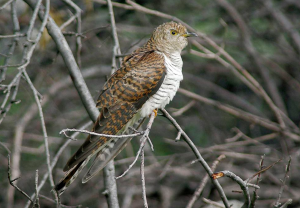
Across Sweden the act of Gökotta starts on Ascension Day, 40 days after Easter, and sees large communities head out to listen to the rich chorus of bird song that welcomes in the spring. In particular, the Cuckoo is a much sought after sound with churches in many parts of the country holding their Ascension morning services outside specifically so members can hear their first Cuckoos of the year.
Across the world, with mental health issues on the rise and more and more people feeling a greater disconnect from the natural world, could Gökotta be the process that allows those fractures to heal? Research has shown that even small amounts of exposure to bird song can be hugely beneficial, boosting mental wellbeing by up to 4 hours each day. A dawn chorus can be enjoyed anywhere, you just need to be prepared to get up with the lark and begin listening before sunrise.
But what can Gökotta teach us? For many, the dawn chorus is a finite daily event that see’s the same birds, singing the same songs in the same places, but this is inaccurate. Over time dawn choruses all over the world have changed, not least here in the UK as species like Turtle Dove, Nightingale, Yellowhammer and Wood Warbler are all but gone from many people’s morning soundscapes. At coastal sites where displaying Redshank and singing Curlew were once part of the early morning crescendo, the calls of newly establishing Mediterranean Gulls can now be heard instead. But what we lose in some species we gain in others with Firecrest, Blackcap and Common Whitethroat all seeing dramatic increases in many parts of the country, providing a different structure to the mornings proceedings compared to 30 years ago.
With Gökotta officially finishing on June 21st, why not get out and practice this new bathing technique over the next month to see and hear how this Swedish tradition can focus your mind and expand your learning?
Posted on: May 15th, 2020 by Birds of Poole Harbour
Lockdown has been a long, and for many people, difficult process. People have found comfort and hope in nature by tuning into nest cams, counting birds in their garden and listening to their local dawn choruses. But what about nature it’s self? How has that coped with no people or disturbances in the landscape? Time will tell, depending on whether any breeding bird surveys or ringing can take place later in the year but are there opportunities to help now?
As a conservation charity not only have we been struggling not meeting and speaking to people about our work via our public bird boat scheme or engaging in chat in our HQ. We’ve been desperate to get some practical conservation work up and running too.
Last year thanks to a kind donation from local business Saltwater Stone we were able to kickstart our Swift City project by erecting several new Swift boxes up and around Old Town Poole. Parallel to this we also hosted a public fundraiser to help us spread the project further across the harbour with aim of getting more boxes up this spring. Then Covid-19 hit and we were stopped in our tracks.
Swifts have declined as a breeding species in the UK by 58% since 1995 which is a startling statistic. The RSPB also recently launched an appeal for Swift sightings across the UK by creating this SWIFT MAPPER, which allows people to input nesting Swift locations across the country.
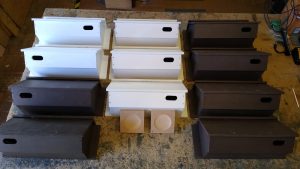
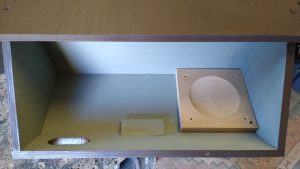
We were also keen to act and get things moving again to help Swifts, so before the breeding season had gone too far we quickly identified a series of new locations for Swift nest boxes at other sites in the harbour, using contacts of ours within ‘Swift Hotspots’ who kindly provided data and sightings to us, meaning we didn’t need to leave our houses. With the new locations identified we had a series of new Swift boxes made locally (online order times were several weeks)! And we’ve now arranged with homeowners for us to come and install them quickly and safely just in time for the breeding season.
So, huge thanks to everyone that contributed last year, we’re now (today and early next week) getting the boxes up (15 more in total) in the hope that Swifts will start using them this summer, therefore helping to bolster and increase existing populations around then harbour……..lets see what happens!
Posted on: April 2nd, 2020 by Birds of Poole Harbour
Well, yesterday, despite all the doom and gloom, we had a welcome and exciting piece of news that the Rutland female Osprey, CJ7, that has spent the last 3 summers in Poole Harbour returned this morning as a trial camera snapped her on one of the Arne nest platforms for a brief moment. Although she was only seen for a short moment, that fact she’s back is just the tonic we needed and hopefully the story will develop from here on in with LS7 hopefully not too far behind her.
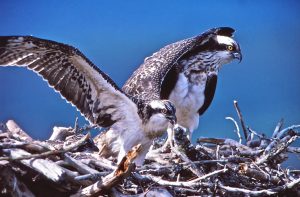
Adult female and chick on nest, Hugh Miles
To celebrate this great news we’re proud and honoured to have been given permission to host a wonderfully classic and beautifully produced film that was made back in 1979 by local wildlife film-maker Hugh Miles. Hugh, who doesn’t live a million miles from Poole Harbour, is a highly commended and award winning wildlife film maker who has dedicated his life to conservation and creating rich, detailed and powerful films about the natural world. Hugh joined us on one of our Osprey cruises last summer and very kindly (just a few weeks ago) sent us this film which blew us away.
With thanks to the RSPB media unit who have kindly granted us permission to use the film, we’re thrilled so many people are going to be able to watch it as the story and conservation messages in this film are just as relevant today as they were back in the late 1970’s.
Hugh kindly provided us with these comments about one of his favourite birds;
“One of our children’s first words was “osprey”, for we lived alongside these charismatic birds for two years while filming them in the early years of their re-colonisation of Scotland and our love for them is deep in our souls. Katie and Peter still get excited whenever they see one, as do Sue and I, so we can’t admire the Birds of Poole Harbour team more for their brave and exciting initiative to re-establish the breeding of ospreys just ten miles from our home. These are trying times but if you want the best possible news, the osprey’s imminent return is it.”
Considering the types of recording and film equipment that were needed back then, it’s just astonishing how Hugh managed to get some of this footage….just incredible.
So, for a classic reminder of how we got to where we are today, please sit back, relax and enjoy this wonderful piece of wildlife history.
Posted on: April 1st, 2020 by Birds of Poole Harbour
If you have visited our engagement HQ on Poole Quay, then you will probably have used our large, interactive touch screen map which offers a wealth of information and helps visitors visualise birding routes around the harbour.
However, this resource has more potential. Despite the temporary closure of our engagement centre, our team are still beavering away behind the scenes and are currently producing a fully interactive bird quiz, offering a fun and informative resource.
The quiz will cover all ages and abilities. Exercises include identification of photos and videos, silhouettes, calls and sonograms… so there will be something for everyone! Whether you’re an avid beginner or experienced ornithologist, the interactive quiz will help you learn about the Harbour’s incredible wildlife
We would love to include some of your photos and videos in our new interactive quiz. That includes all those blurry out-of-focus images and record shots too! Record shots are just as welcome as a frame-filling images as these can feature in our more difficult identification levels…
So, if you would like any of of your photos or videos credited, please email hqmanager@birdsofpooleharbour.co.uk