The blustery weather continues to deliver, with those willing to venture out being rewarded with Little Gull records from the Branksome tideline, Harbour mouth, Shell Bay and South Beach through the day. A Grey Phalarope passed south along Shell Bay earlier afternoon and the drake Common Scoter remained off Middle Beach. Elsewhere, Brownsea Lagoon harboured an impressive 600 sinensis Cormorant and highlights from Lytchett Bay included 10 Spoonbill, 13 Brent Gosse, a single Spotted Redshank, 5 Greenshank and a couple of Mediterranean Gull.

Poole Harbour sightings blog
A record of all interesting and notable sightings from around the harbour throughout the year.
Latest Sightings
Harbour Update – 26/10/26
Harbour Update – 25/10/26
It’s always nice to pull together the sightings on a Wetland Bird Survey (WeBS) day. Birds of Poole Harbour coordinate the local WeBS count, tasking a team of volunteers to count non-breeding waterbirds each month at low tide. Due to it’s size, the Harbour is spilt into over 30 sectors which are all counted at the same time, ensuring maximum coverage. Sightings are still filtering in, but highlights from the afternoon count include 8 White-fronted Geese flying west up the Middlebere Channel towards Wareham, 2 Great Northern Diver, 4 Dark-bellied Brent Goose and an Arctic Skua from Studland Bay, and a Grey Phalarope off Fitzworth.
Little Gull were numerous, logged at various sites in the morning, North Haven (3), Lytchett Bay (1) and Studland Bay (3), plus a drake Common Scoter also from the latter. A seawatch at Branksome Chine from first light produced 2 Arctic Skua, 15 Little Gull, and a Great Northern Diver all heading back out of Poole Bay. Inland, there was news of a Ring Ouzel in an Upton garden since Friday, 23 Cattle Egrets on Wareham Water Meadows. A Black Redstart around North Haven car park.
White-fronted Geese in flight – Ed Betteridge

Harbour Update – 24/10/26
The day-long deluge provided little inspiration to venture outside, however with Leach’s Petrel and Little Gull logged elsewhere along the Dorset coast, seawatching is certainly on the menu for tomorrow. Slim pickings for today’s sightings report featured 21 Spoonbill and 200 Avocet sheltering on Brownsea Lagoon, with a further 80 Avocet and 2 Knot in Holes Bay.
Harbour Update – 22&23/10/26
Well, Storm Austen has been in full force today, with heavy winds and rain making for tricky birding conditions, so much so we’ve had to cancel our scheduled safari cruises over the next couple of days. After the weather settles, who knows what might appear in harbour, having sheltered from the storm!? Highlights over the last couple of days include 1 Merlin seen from RSPB Coombe Heath today and 1 Hen Harrier hunting on Slepe. 1 Spotted Redshank, 3 Marsh Harrier, 2 White-tailed Eagle, 1 Peregrine, and 1 Great White Egret were seen at Middlebere yesterday. 2 Glossy Ibis flew low over Purbeck School heading towards the Frome Valley. 5 Swallow were seen battling into the wind in the Piddle Valley.
In other news, the BoPH team celebrated 3 wins at the Dorset Tourism Awards last night, winning the Gold Award for the Regenerative Tourism Award, Gold Award for Active and Learning Experience of the Year for our Poole Harbour Osprey Cruises, and the Winner of Winners Award! Thank you to everyone that supports us, we couldn’t do our work without you.
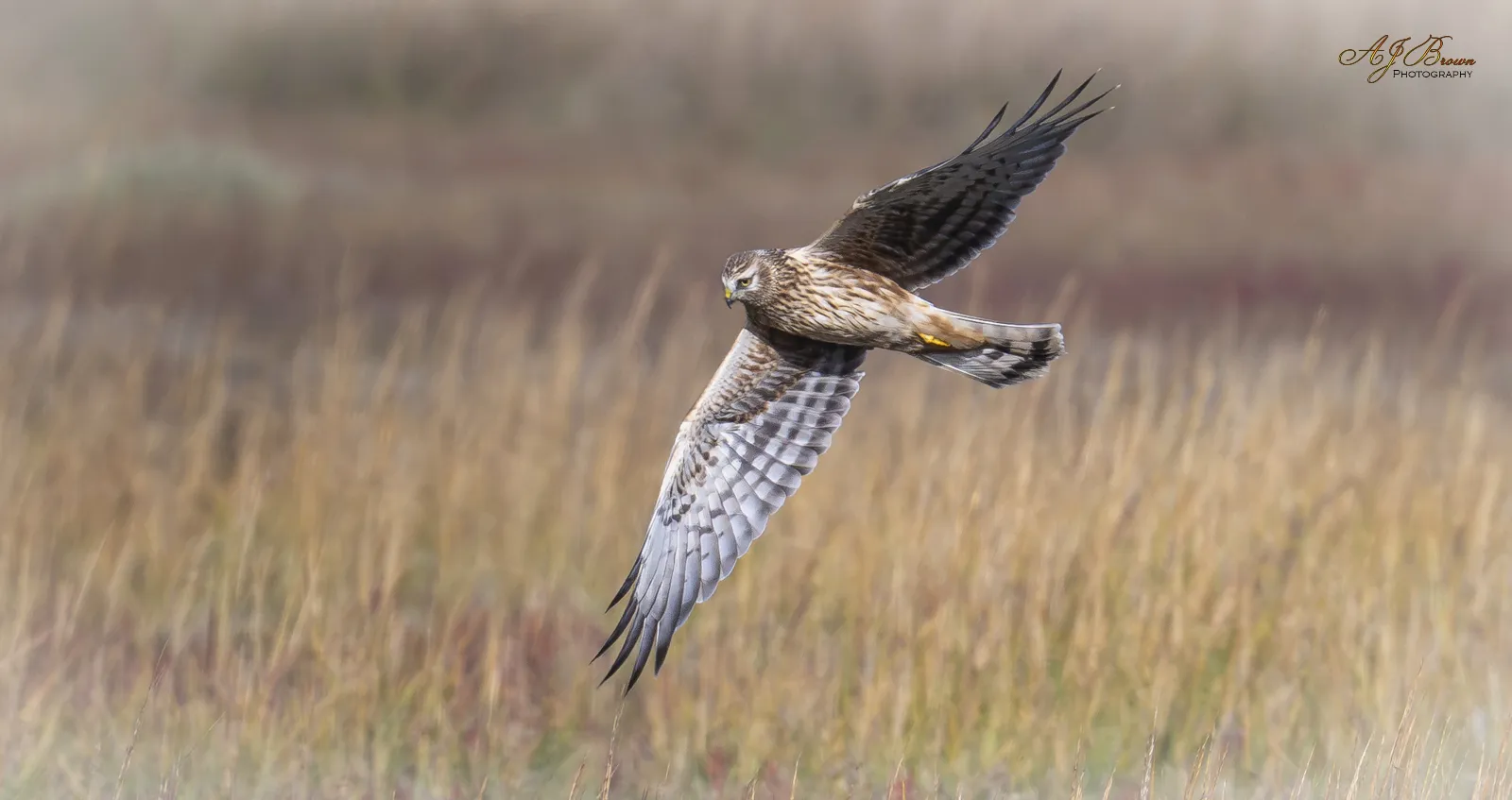
Hen Harrier – @wessexwildlife.bsky.social
Harbour Update – 21/10/26
More tricky weather today, although fairly calm to start with. There were 17 Spoonbill in Lytchett Bay and 3 in Holes Bay. A Spotted Redshank was in Middlebere, a Red Kite difted over Brownsea, a White-tailed Eagle was in the Wareham Channel and a Merlin was also seen in Middlebere.
Harbour Update – 20/10/26
Hard going today with non-stop rain since first light! The only report today was of 27 Spoonbill in Arne Bay at dawn. There was also some great info from local Holes Bay birder Steve Smith who got some data back regarding details of a colour-ringed Spoonbill which was feeding in Holes Bay [NE sector] on 18th Oct, two days ago.
Female ringed as pullus (chick) at Schiermonnikoog, Netherlands in 2006.
The ring details are:
- left leg dark blue with orange letters AC;
- right leg white stained yellowish, with black letters AE.
This bird has now visited Poole Harbour in 18 out of the 21 winters of its life, including the current month as winter ; it has spent many / all of its summers at its birthplace in Holland and has often been seen in autumn in the Baie de Somme in northern France.
Harbour Update – 19/10/26
With both Long-tailed Duck and Velvet Scoter having passed Portland and Kimmeridge Bay in the last 48 hours, is there a chance either could end up in the harbour soon? Scaup, Goldeneye and Common Scoter have all been recent open water sea duck visitors to the harbour, so hopefully Velvet Scoter and Long-tailed Duck will be next. Other than that just 15 Spoonbill and 14+ Greenshank on Brownsea and 2 Firecrest in the PCW Drain were noteworthy sightings. A notable count of 1282 Wigeon was logged in Holes Bay, 2 White-tailed Eagle were in the Wareham Channel, a Marsh Tit was ringed in Norden and a few more Redwing were ringed at the Carey Ringing Station.
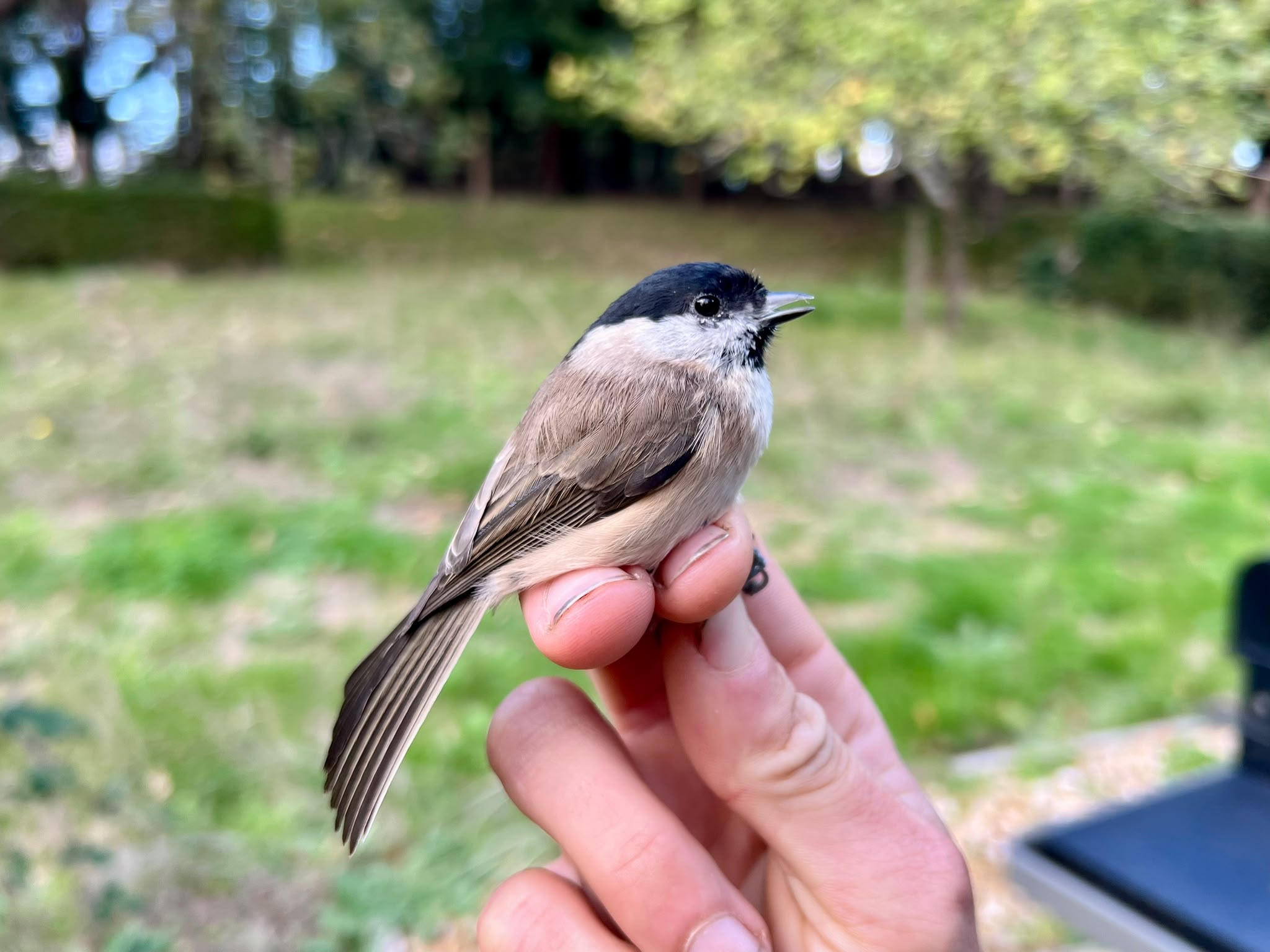
Marsh Tit – Norden – Kate Fox
Harbour Update – 18/10/26
It was another classic autumn morning this morning, as more cold NE winds bedded it. This got the visible mirgration going up on Ballard Down and resulted in 7 Brambling, 9 Lesser Redpoll, c500 Goldfinch, c120 Siskin, c210 Chaffinch, c300 Linnet, 2 Bullfinch, c80 Redwing, c100 Song Thrush, 1 Fieldfare, 2 Common Snipe, 4 Jay, 28 Swallow and 4 House Martin. Wood Pigeon were also moving around with c2000 going back and fourth along the Ballard ridge with no real purpose. In the surrounding scrub 6 newly arrived Firecrest & 20 Chiffchaff were feeding. This morning 2 White-tailed Eagle flew low over Lytchett Bay and another Brambling flew over there and a Barnacle Goose was with a Canada Goose flock. At Bog Lane, near Stoborough only 8 Cattle Egret were counted, but 3 Glossy Ibis were seen flying over Swinheham/Keysworth.
Vis-mig mixed finch flock – Ballard Down this AM
Harbour Update – 17/10/26
With a cold air flow now dominating much of Britain there were more signs that winter is just around the corner when 2 Scaup arrived into the harbour this morning, one off Goathorn, near Brands Bay and a second in the Wareham Channel. The seasons first flock of Fieldfare also flew through Middlebere just after lunchtime with a group of c100 seen heading up the channel. There was some limited visible migration at the harbour mouth with 3 Lesser Redpoll, 1 Brambling, 7 Song Thrush, 2 Redwing, c20 Skylark and a few tens of Chaffinch and Siskin with 441 Wood Pigeon. There were 7 Great White Egret with 1 in Brands Bay and 6 around the Swineham area and 6 Glossy Ibis were present with 1 on the island at Swineham GP and 5 feeding on the mud in the Wareham Channel. At Shipstal Point, RSPB Arne the Spoonbill flock of c50 were feeding on this mornings low tide, and there were another 7 on the Brownsea Lagoon. RSPB Arne Moors held 3 Spotted Redshank and 7 Greenshank, viewed from a survey boat and 5 Marsh Harrier and 4 Red Kite were around the Keysworth area, with another Marsh Harrier seen arriving in over Studland/Ballard. Up to 4 different White-tailed Eagle were moving around the harbour during the day. A Goldeneye flew into the harbour entrance at dawn a late Wheatear and a punctual Merlin were up on Ballard.
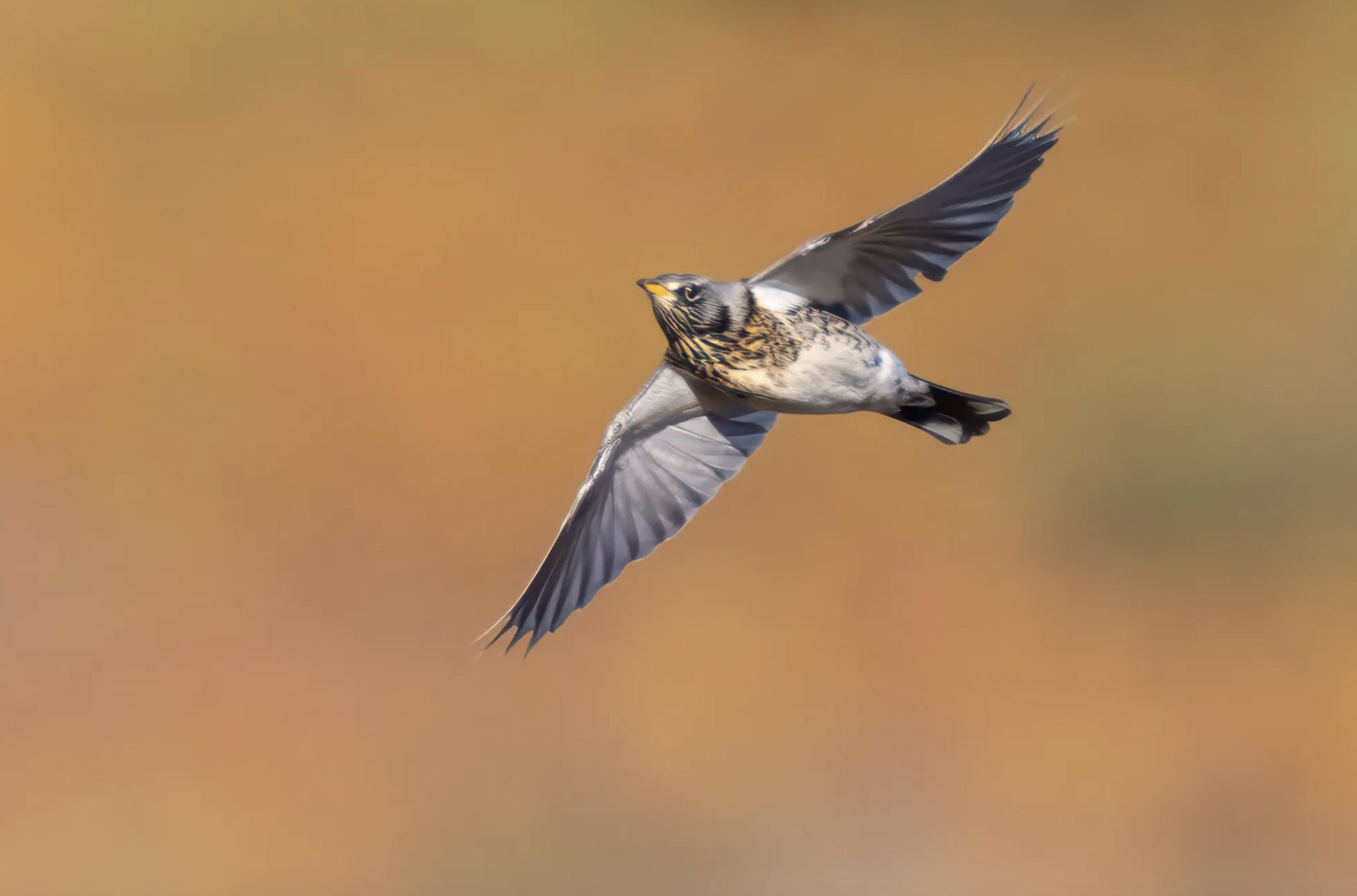
Fieldfare – Middlebere – Mark Wright
Harbour Update – 16/10/26
The cold snap really felt like it was kicking in today with clear sky’s and a northerly build up in the wind. A brief vis-mig session at the harbour mouth delivered the autumns first Brambling along with just a handful of 71 Siskin, 45 Goldfinch, 28 Chaffinch, 24 Meadow Pipit, 3 Skylark and 1 Reed Bunting. At Shipstal Point c60 Spoonbill were roosting, a Goshawk bombed through Middlebere, 3 different White-tailed Eagle were between RSPB Arne and the Wareham Channel. A Great White Egret was over Lytchett Fields, 4 Glossy Ibis went into the Swineham roost tonight.
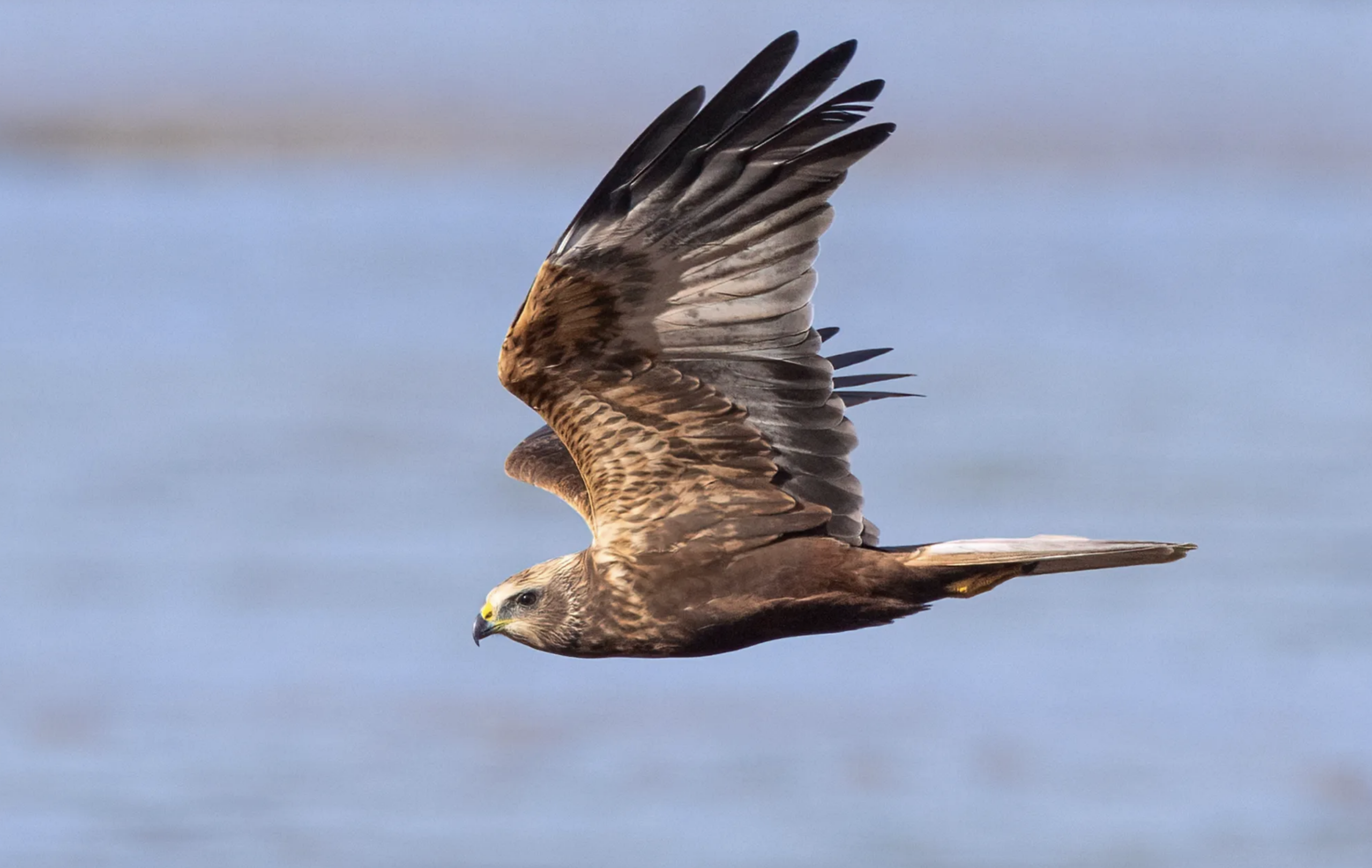
Marsh Harrier – Poole Harbour south – Mark Wright
Call 01202 641 003
© 2026 Birds of Poole Harbour Registered Charity No. 1152615