Archive for the ‘Uncategorised’ Category

‘Osprey’ – Film

Posted on: April 2nd, 2020 by Birds of Poole Harbour

Well, yesterday, despite all the doom and gloom, we had a welcome and exciting piece of news that the Rutland female Osprey, CJ7, that has spent the last 3 summers in Poole Harbour returned this morning as a trial camera snapped her on one of the Arne nest platforms for a brief moment. Although she was only seen for a short moment, that fact she’s back is just the tonic we needed and hopefully the story will develop from here on in with LS7 hopefully not too far behind her.
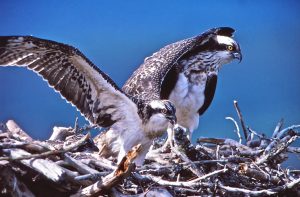
Adult female and chick on nest, Hugh Miles

To celebrate this great news we’re proud and honoured to have been given permission to host a wonderfully classic and beautifully produced film that was made back in 1979 by local wildlife film-maker Hugh Miles. Hugh, who doesn’t live a million miles from Poole Harbour, is a highly commended and award winning wildlife film maker who has dedicated his life to conservation and creating rich, detailed and powerful films about the natural world. Hugh joined us on one of our Osprey cruises last summer and very kindly (just a few weeks ago) sent us this film which blew us away.

With thanks to the RSPB media unit who have kindly granted us permission to use the film, we’re thrilled so many people are going to be able to watch it as the story and conservation messages in this film are just as relevant today as they were back in the late 1970’s.

Hugh kindly provided us with these comments about one of his favourite birds;

“One of our children’s first words was “osprey”, for we lived alongside these charismatic birds for two years while filming them in the early years of their re-colonisation of Scotland and our love for them is deep in our souls. Katie and Peter still get excited whenever they see one, as do Sue and I, so we can’t admire the Birds of Poole Harbour team more for their brave and exciting initiative to re-establish the breeding of ospreys just ten miles from our home. These are trying times but if you want the best possible news, the osprey’s imminent return is it.”

Considering the types of recording and film equipment that were needed back then, it’s just astonishing how Hugh managed to get some of this footage….just incredible.

So, for a classic reminder of how we got to where we are today, please sit back, relax and enjoy this wonderful piece of wildlife history.

‘Osprey’ – A year in the life (part 1) 

‘Osprey’ – A year in the life (part 2) 
Calling all birdwatchers, photographers and nature lovers

Posted on: April 1st, 2020 by Birds of Poole Harbour

If you have visited our engagement HQ on Poole Quay, then you will probably have used our large, interactive touch screen map which offers a wealth of information and helps visitors visualise birding routes around the harbour.

However, this resource has more potential. Despite the temporary closure of our engagement centre, our team are still beavering away behind the scenes and are currently producing a fully interactive bird quiz, offering a fun and informative resource.

The quiz will cover all ages and abilities. Exercises include identification of photos and videos, silhouettes, calls and sonograms… so there will be something for everyone! Whether you’re an avid beginner or experienced ornithologist, the interactive quiz will help you learn about the Harbour’s incredible wildlife

We would love to include some of your photos and videos in our new interactive quiz. That includes all those blurry out-of-focus images and record shots too! Record shots are just as welcome as a frame-filling images as these can feature in our more difficult identification levels…

So, if you would like any of of your photos or videos credited, please email hqmanager@birdsofpooleharbour.co.uk

Birds of Poole Harbour Bird Cam Challenge

Posted on: March 30th, 2020 by Birds of Poole Harbour

We’re continuing to try and provide interactive education material for parents and teachers to use over this lockdown period so have teamed up with our friends at Livability Holton Lee, Dorset Wildlife trust and National Trust to get you to carry out some online birding this spring

Firstly, back when we fist formed charity, one of the projects we invested in was a set of webcams on the Brownsea Lagoon which over the years has provided a really exciting opportunity to watch this exceptionally important habitat. During the winter it plays host to nationally and internationally important numbers of waders and wildfowl. But as winter gives way to spring, the lagoon acts as a breeding haven for Poole Harbours important Sandwich and Common Tern colony. Through April these birds will be returning to breed whilst many other species use the lagoon as a feeding service station as they make their way to other places around the world! So, to get you looking in detail, we’ve created some ID sheets for you to use online, or to print out to see how many species you can find over the course of the spring and summer.

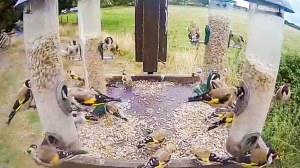
Several years ago we also installed a simple bird feeder cam at Livability Holton Lee which allows you to watch all the comings and goings of a busy feeding station within Poole Harbour. There’s no doubt that watching bird feeders was a big inspiration for many people getting into natural history, so, just like our Brownsea ID sheets, we’ve created a set of Bird Feeder ID sheets for you to use with children (or for your self) to get you looking in detail at some of the bird you might expect to see your selves either in your gardens out in local parks.

Here are the links to the three webcams you’ll need…….

Livability Holton Lee Feeder Cam 

Brownsea Lagoon – Elevated Hide 

Brownsea Lagoon Macdonald Hide 

Here are the links to the ID sheets for each camera 

Holton Lee Feeding Station

Printer Friendly Holton Lee Feeding Station

Brownsea Lagoon Cam Tick Sheet

Printer-friendly Brownsea Lagoon

Goldfinch on Holton Lee Feeder Cam

World Osprey Week Day 5 – Translocation Project

Posted on: March 27th, 2020 by Birds of Poole Harbour

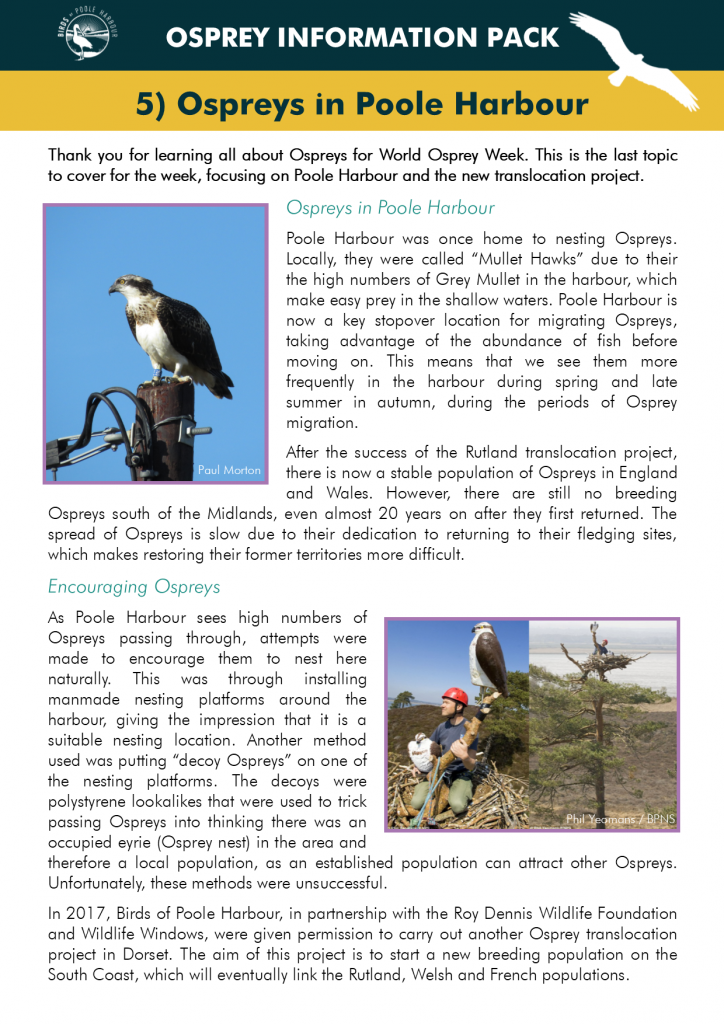
We have covered 5 topics, including the final pack today on Poole Harbour and the translocation project. We hope you have enjoyed learning about Ospreys from home and have managed to get involved in all the activities.

The final PDF can be found here: World Osprey Week Translocation

World Osprey Week Day 4 – History

Posted on: March 26th, 2020 by Birds of Poole Harbour

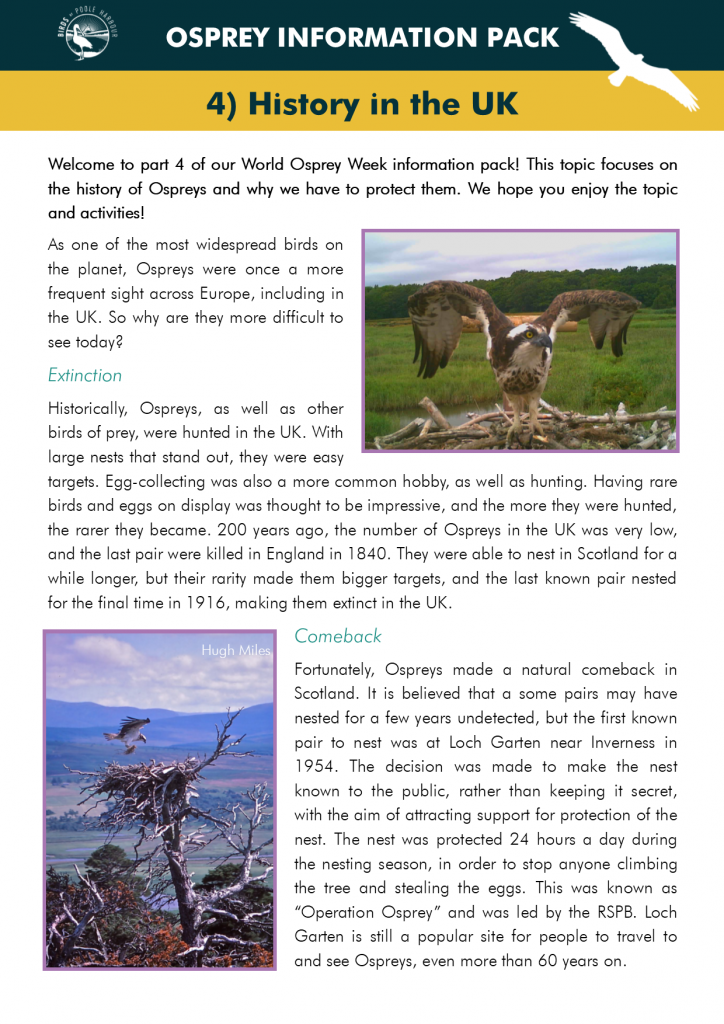
Join us in learning about the history of Ospreys in the UK in the new topic. You can download the full PDF here: World Osprey Week History

Check back in tomorrow for the final instalment. We hope you enjoy today’s topic!

World Osprey Week Day 3 – Migration

Posted on: March 25th, 2020 by Birds of Poole Harbour

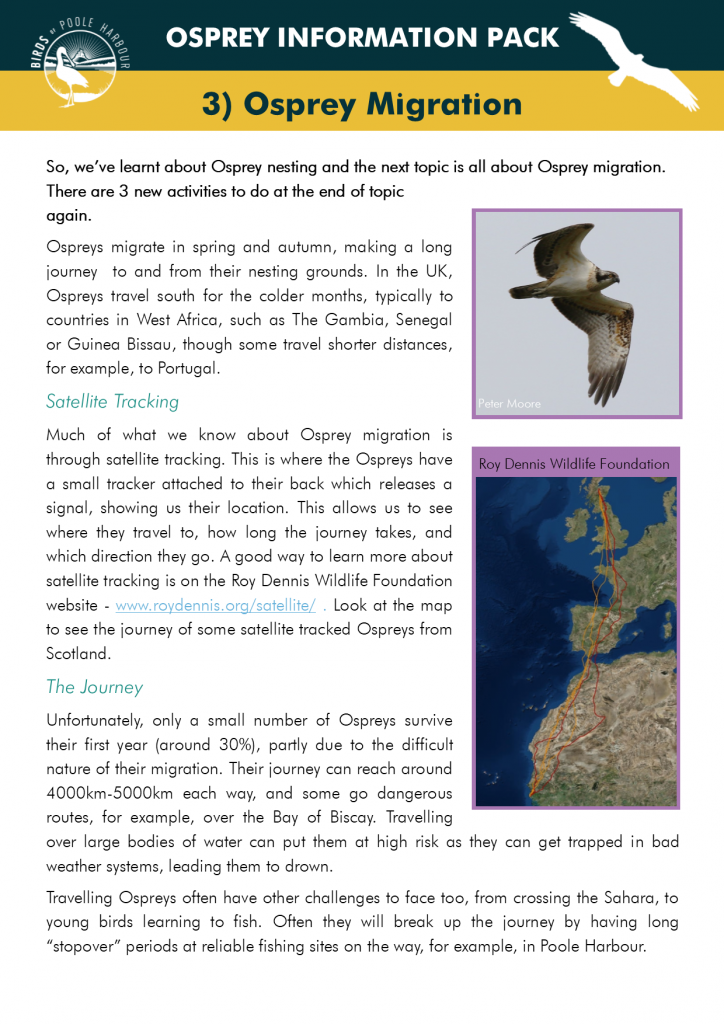
We hope you enjoy this next topic and have been enjoying learning about Ospreys so far. As usual, you can find the full PDF download here: World Osprey Week Migration

Tomorrow we will have another new topic, so remember to check back in!

World Osprey Week Day 2 – Nesting

Posted on: March 24th, 2020 by Birds of Poole Harbour
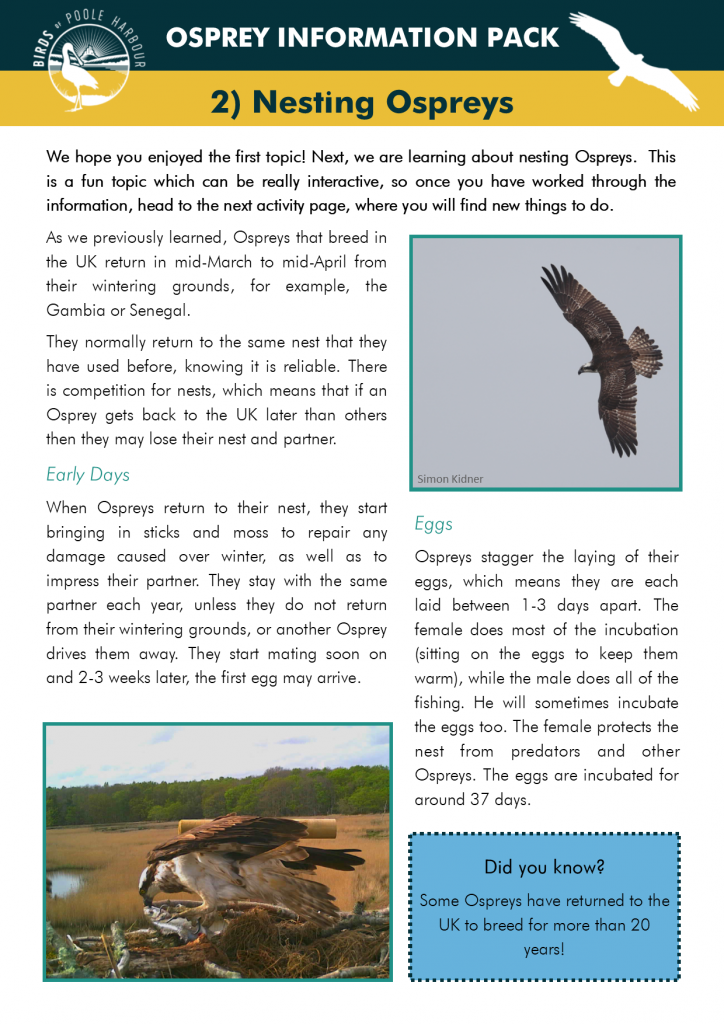
This time it’s all about nesting, which is perfect timing right now with Ospreys returning and starting to nest. As is yesterday’s material, the full PDF can be downloaded here: World Osprey Week Nesting
Let us know what you see on the webcams and send us any pictures of nests you have built!

World Osprey Week – Learn at Home!

Posted on: March 23rd, 2020 by Birds of Poole Harbour

It’s World Osprey Week (23rd-28th March) and, while schools are closed, we want to use the opportunity to increase education about Ospreys and the Translocation Project, through providing material for families to use at home. Each day this week we will post a new topic, along with activities to make the learning more fun.

Let us know if you use the materials, what you learn and whether you see any Ospreys on our webcam. Follow the link to download the PDF for Osprey Learning Day 1: World Osprey Week Introduction

We hope you enjoy!


Birds of Poole Harbour HQ temporary closure

Posted on: March 13th, 2020 by Birds of Poole Harbour

Big Poole Harbour Bird Count – THE RESULTS

Posted on: February 21st, 2020 by Birds of Poole Harbour

On January 19th 2020, Birds of Poole Harbour organised and conducted the Big Poole Harbour Bird Count which was to provide the public with an opportunity to get out and explore their local patch whilst collecting important data which would be used to provide a snapshot of bird species diversity, species totals and species distribution across the Poole Harbour area on a single day during the winter. Poole Harbour is nationally and internationally important for a whole range of species during the winter with many birds arriving from thousands of miles away to seek refuge here during the colder months.

SUBMISSIONS MAP : THIS LINK will take you to our survey results map which plots everyone’s records from the day and provides a range of statistics from the Big bird Count.

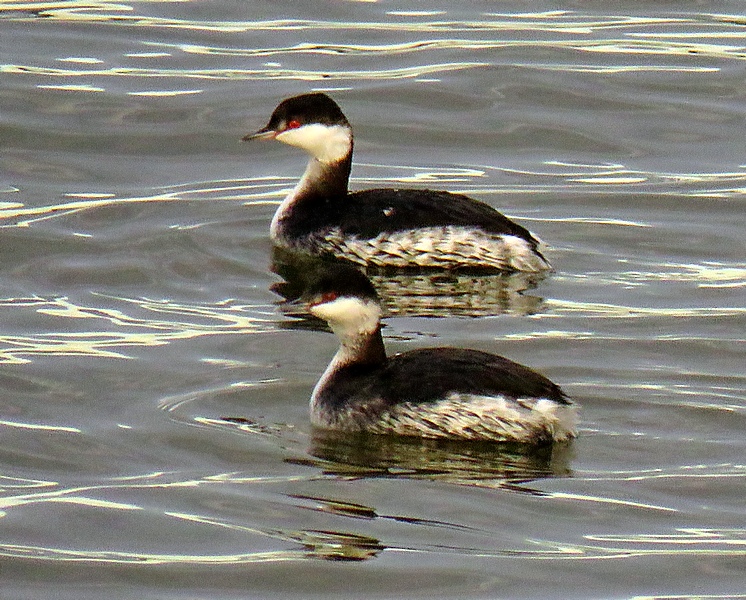
Slavonian Grebe – Jerry’s Point – Ian Ballam

On the day of the survey, the weather was certainly on side as winter sunshine beamed down across the harbour and a light northerly wind softly cooled the cheeks of each of the participating members of the public. The survey also coincided with the monthly Poole Harbour WeBS (Wetland Bird Survey), which is an important survey managed by Birds of Poole Harbour and carried out by 31 BTO (British Trust for Ornithology) volunteers which see’s every single water bird in the harbour counted each month during the winter to monitor over-wintering populations.

The ask was simple…..if you were out birding that day, we wanted to know what you saw, how many you saw, and when and where you saw it. Then, with that data we would be able to analyse and asses totals of each species based on when people saw different birds and where they saw them.

Now, after a few weeks of getting our head around the data we’re able to provide you with the final counts and totals from the records submitted to us from the survey.

The Purpose : Although this data only provides a snapshot of bird populations on a single day, it’s hoped that we’ll be able to host this event as an annual survey from now on, and like any long term data set, we should be able to note population and range changes over time. Plus, it also allows us to note which species are under recorded/represented and perhaps need a special survey focus in the future to gage true populations, for example Water Rail, Jack Snipe, Woodcock etc.

Call 01202 641 003