We’ve just ended our three day Dorset Discovery autumn tour for which I will write a trip report for soon, but sightings from the final day included 18 Yellow Wagtail, 1 Osprey, 1 Redstart, 1 Whimbrel and plenty of Siskins over at Greenlands Farm. At Brands Bay there were 3 Pintail and more Siskins over. The Brownsea Lagoon looked wonderful with 2 Little Stint feeding with Dunlin, 24 Spoonbill, 7 Spotted Redshank, 11 Greenshank, 200+ Avocet, 17 Ringed Plover, 5 Wigeon, Common Tern chicks still being fed and 3 Turnstone. On Shell Beach a Little Tern was resting with Sandwich Terns and there was also 6 Sanderling. Finally, at Challow Hill, Corfe we connected with 1 Hobby, 1 Whinchat, 2 Dartford and again….Siskins overhead. This movement of Siskin coincided with a big passage at South Haven, Studland where a total of 888 were counted in a few hours at dawn. Other species noted during the vis-mig watch included 1 Pied and 1 Grey Wagtail, 92 Swallow, 2 House Martin, 18 Sand Martin and 4 Goldfinch. At RSPB Lytchett Fields 3 Ruff, 8 Green Sandpiper, 44 Snipe, 3 Ringed Plover, 5 Greenshank, 1 Wood Sandpiper and 3 Knot were noted.

Poole Harbour sightings blog
A record of all interesting and notable sightings from around the harbour throughout the year.
Latest Sightings
Harbour Update – posted 09/09/15
Harbour Update – posted 08/09/15
A promising easterly wind started to blow throughout the day bringing in an adult Little Tern to the harbour mouth that was fishing first thing this morning. Also at South Haven a single Lesser Whitethroat and Garden Warbler. Up on Old Harry 16 Siskin headed NE and migrant wise 1 Spotted Flycatcher, 1 Grasshopper Warbler, 1 Garden Warbler, 11 Whitethroat and 7 Blackcap were noted. In Brands Bay, no Osprey but 2 Pintail, 7 Wigeon, 1 Wheatear and 25 Siskin north. On RSPB Lytchett Fields 1 Wood Sandpiper, 9 Green Sandpiper, 3 Ruff, 27 Dunlin, 2 Knot, 4 Greenshank, 2 Ringed Plover, 15 Snipe and 1 Redstart. The (A) Great White Egret was seen out in the Wareham Channel a couple of times, favouring to hug the Arne Moors boarder where 4 Hobby were feeding. 2 Spotted Flycatcher were at Holton Lee with 1 Marsh Tit and 40+ Yellow Wagtail were on top of Hartland Moor with cattle.
Harbour Update – posted 07/09/15
Migrants are still popping up everywhere with 4 Yellow Wagtail, 2 Spotted flycatcher, 2 Wheatear, 1 Whinchat, 2 Redstart, 3 Whitethroat, 10 Blackcap and a good mix of Willow/Chiff all at Greenlands Farm. In Brands Bay there were 8 Pintail, 1 Osprey 1 Whimbrel, 90 Black-tailed godwit, 1 Greenshank and 12 Dunlin. On RSPB Lytchett Fields there were 3 Ruff, 10 Green Sandpiper, 45 Snipe, 3+ Knot, 2 Ringed Plover and 38 Dunlin. Ane was busy with 4 Curlew Sandpiper in the Middlebere Channel from the viewing screen on Coombe Heath, 11 Knot from the same spot, 1 Osprey, 2 Hobby, 1 Peregrine, 3 Redstart, 1 Whinchat, 10+ Spotted Flycatcher, 2 Whitethroat and 2 Greenshank.
Harbour Update – posted 06/09/15
RSPB Lytchett Fields was flavour of the month again with 1 Wood Sandpiper, 2 Ruff, 33 Dunlin, 2 Knot, 6 Green Sandpiper, 2 Greenshank, 1 Ringed Plover, 20+ Yellow Wagtail and 1 Sedge Warbler. At South Haven 8 Shoveler flew into the harbour, also 3 Ringed pLover present, 2 Sanderling, 1 Spotted Flycatcher, 1 Redstart, 1 Wheatear and a handful of Willow/Chiff. In Brands Bay 7 Wigeon have now arrived, 2 Pintail, 2 Osprey, 14 Spoonbill (distantly) 2 Sparrowhawk, 1 Hobby, 1 Ringed plover, 81 Black-tailed godwit, 1 Greenshank, 89 Redshank, 1 Wheatear and 1 Kingfisher. 1 Curlew Sandpiper was in Middlebere and 3 Yellow Wagtail, 1 Tree Pipit, 1 Whitethroat, 1 Lesser Whitethroat, 1 Redstart and numerous Dartford Warbler and Stonechat present.
Harbour Update – posted 05/09/15
The low cloud and still conditions allowed a few migrants to feed, especially around Slepe Heath where our monthly Birds of Poole Harbour field trip took place. Highlights from the walk included 1 juvenile Cuckoo, a flock of 12 Woodlark, 5+ Redstart, 5+ Spotted Flycatcher, 5+ Whinchat, 2 Wheatear, 2 Whitethroat, 4 Yellow Wagtail, 50+ Siskin in a single flock, 1 Osprey in the Wareham Channel plus good numbers of Willow Warbler, Chiffchaff, Dartford Warbler, Meadow Pipit, Stonechat and a Kestrel. At RSPB Lytchett Fields there were 2 Ruff, 1 Wood Sandpiper, 32 Dunlin, 3 Greenshank, 3 Green Sandpiper, 1 Knot and only a few Black-tailed Godwit, Redshank and Lapwing.
Harbour Update – posted 04/09/15
The Osprey theme continued with 2 more in the Wareham Channel first thing along with 4 Marsh Harrier leave the roost and 13 Spoonbill flying up channel and then back east. A ringing session at Lytchett Heath produced 3 Grasshopper Warbler, 1 Garden Warbler, 1 Whinchat and a definite increase in Blackcap and Chiffchaff along with a few Sedge and Reed Warbler. At RSPB Lytchett Fields were 1 Wood Sandpiper, 1 Ruff, 2 Wheatear, 2 Yellow Wagtail, 2 Spotted Flycatcher and 1 Greenshank. At Upton CP there were 16 Knot, 300+ Black-tailed Godwit and 50+ Wigeon. Across the Studland area three were 5 Gannet, 2 Common Scoter and 1 Lesser Whitethroat at South Haven. At Brands Bay 3 Osprey were milling around (2 adults and 1 juv), 115 Teal, 5 Pintail, 11 Ringed Plover, 95 Black-tailed Godwit, 5 Greenshank and 36 Dunlin.
Harbour Update – posted 03/09/15
More goodies today when a Great White Egret arrived at Studland, finally settling in Brands Bay for most of the morning. A co-ordinated Osprey count was conducted this morning too and it was found that are no less than 4 at present with 3 seen over Middlebere at once, with another in Brands Bay at the same time. One even sat on the Middlebere nesting platform for 30 minutes this afternoon, which is the first time an Osprey has sat on that platform since being transformed from the original perching post. Other Ospreys noted included a bird fishing out in the Wareham Channel and two sightings of birds over the Arne Road. Also at Arne today 2 Spotted Flycatcher, 1 Pied Flycatcher, 5 Whitethroat, 2 Redstart, 1 sub-adult Marsh Harrier, 1 Hobby and 1 Sparrowhawk. At RSPB Lytchett Fields today 2 Wood Sandpiper, 1 Ruff, 22 Dunlin, 15 Snipe, 3 Ringed Plover, 15 Knot, 1 Redstart, 2 Yellow Wagtail and 1 Whinchat. Up on Old Harry 3 Whinchat, 2 Spotted Flycatcher and 1 Yellow Wagtail were counted. At Greenlands Farm there were 8 Spotted Flycatcher and 1 Wheatear on Ballard. Late news of a Cuckoo at Arne on saturday. 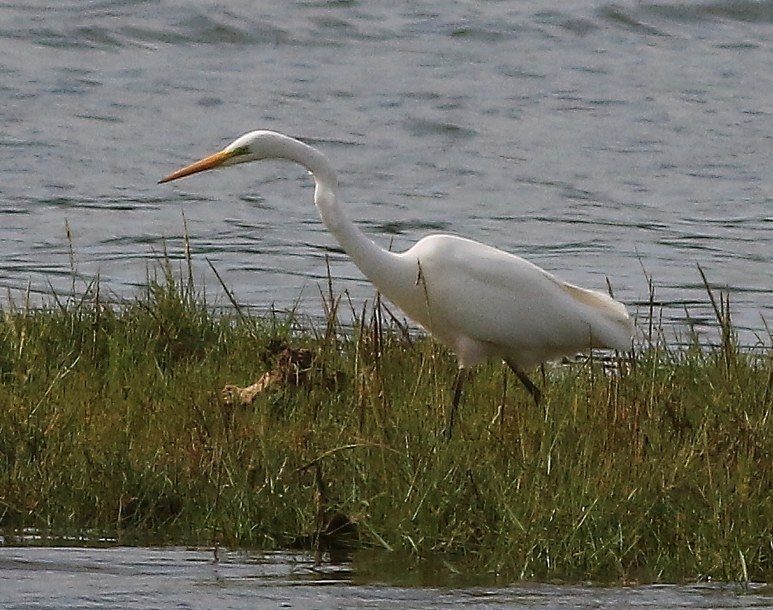
Great White Egret – Brands Bay – Steve Smith
Harbour Update – posted 02/09/15
The super high tides this week have put a bit of a dampener on RSPB Lytchett Fields (no pun intended) by flooding the site and moving many of the birds on. However, the site is still holding 2 Wood Sandpiper, 1 Common Sandpiper, 2 Ruff, 20 Dunlin and the usual Lapwing, Redshank, Black-tailed Godwit etc. Migrant wise, its seems to be doing much better with 30+ Willow Warbler, 5 Spotted Flycatcher, 6 Whitethroat, 1 Lesser Whitethroat and 10+ Chiffchaff. At South Haven there were 11 Sanderling, 2 Ringed Plover, 1 Knot, 1 Wheatear and 1 Garden Warbler. In Brands Bay 200+ Black-tailed Godwit were counted before the long staying juvenile Osprey put them up, also 4 Pintail, 2 Wigeon, and 2 Yellow Wagtail. At Greenland Farm there were 4 Wheatear, 1 Whinchat, 7 Yellow Wagtail, 8 Spotted Flycatcher, 1 Pied Flycatcher, 1 Garden Warbler, 4 Whitethroat ad 12 Willow Warbler. Middlebere saw 1 distant Osprey, 2 Lesser Whitethroat, 1 Marsh Harrier and 4 Wigeon. Also a Lanner Falcon wearing jesses was harassing birds in the Middlebere Channel late evening!
Harbour Update – posted 01/09/15
The 1st of the month got off to a flyer when a juvenile Kentish Plover was found on the Brownsea Lagoon mid afternoon. These are a rare Poole Harbour bird with the last record being in 1992 at Studland. Also on Brownsea 17 Spoonbill, 1 Little Stint, 20+ Ringed Plover, 100 Avocet, 5 Spotted Redshank and 15+ Greenshank. An Osprey was again in Brands Bay early morning with 2 Greenshank and 110 Teal. At RSPB Lytchett Fields 4 Ruff, 1 Wood Sandpiper, 15 Dunlin, 1 Osprey, 4 Whinchat, 3 Whitethroat, 1 Lesser Whitethroat, 1 Garden Warbler, 1 Redstart, and 1 Spotted Flycatcher. At Upton CP 12 Knot flew in (rare here) and a Spotted Redshank.
Harbour Update – posted 31/08/15
After all the excitement of the Bird Race things quietened down and reports from Bank Holiday Monday were few and far between…mainly because the weather was so dire! However new arrivals included 2 moulting adult Curlew Sandpiper along which joined the long staying 5 Ruff, 3 Wood Sandpiper, 15 Ringed Plover, 2 Little Stint, 6 Green Sandpiper, 7 Knot, 32 Snipe, 4 Greenshank, Marsh Harrier and 150 Teal. Osprey, were noted at Arne and in the Wareham Channel, whilst 17 Spoonbill, 5 Spotted Redshank and 15 Knot remained on Brownsea.
With the popularity of RSPB Lytchett Fields increasing, we would also like to take the opportunity to remind visitors to the site that there is strictly no parking in Slogh Lane. A few cars have been photographed parking right inf ront of the access gate for Wessex Water where their large tankers (see photo) need access through and past the gate 24 hours a day. Parking for this site should be along either Sandy Lane or Sea View Road. Many thanks for your cooperation.
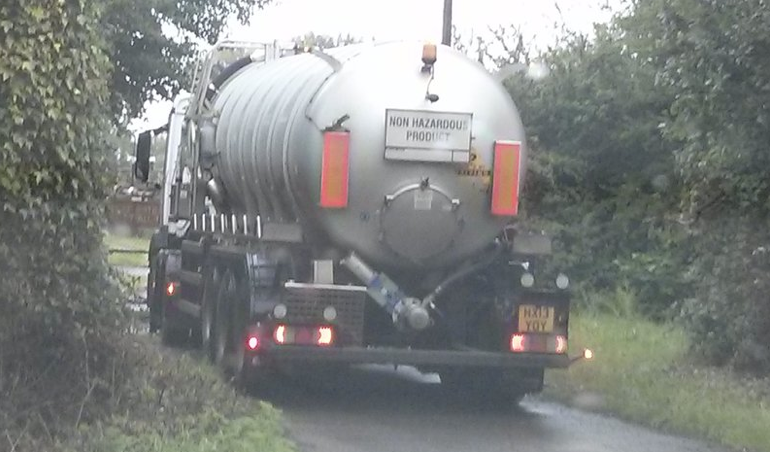
Wessex Water Tanker – Keep Slogh Lane Clear at ALL TIMES – Thank You
Call 01202 641 003
© 2026 Birds of Poole Harbour Registered Charity No. 1152615