Archive for the ‘Uncategorised’ Category

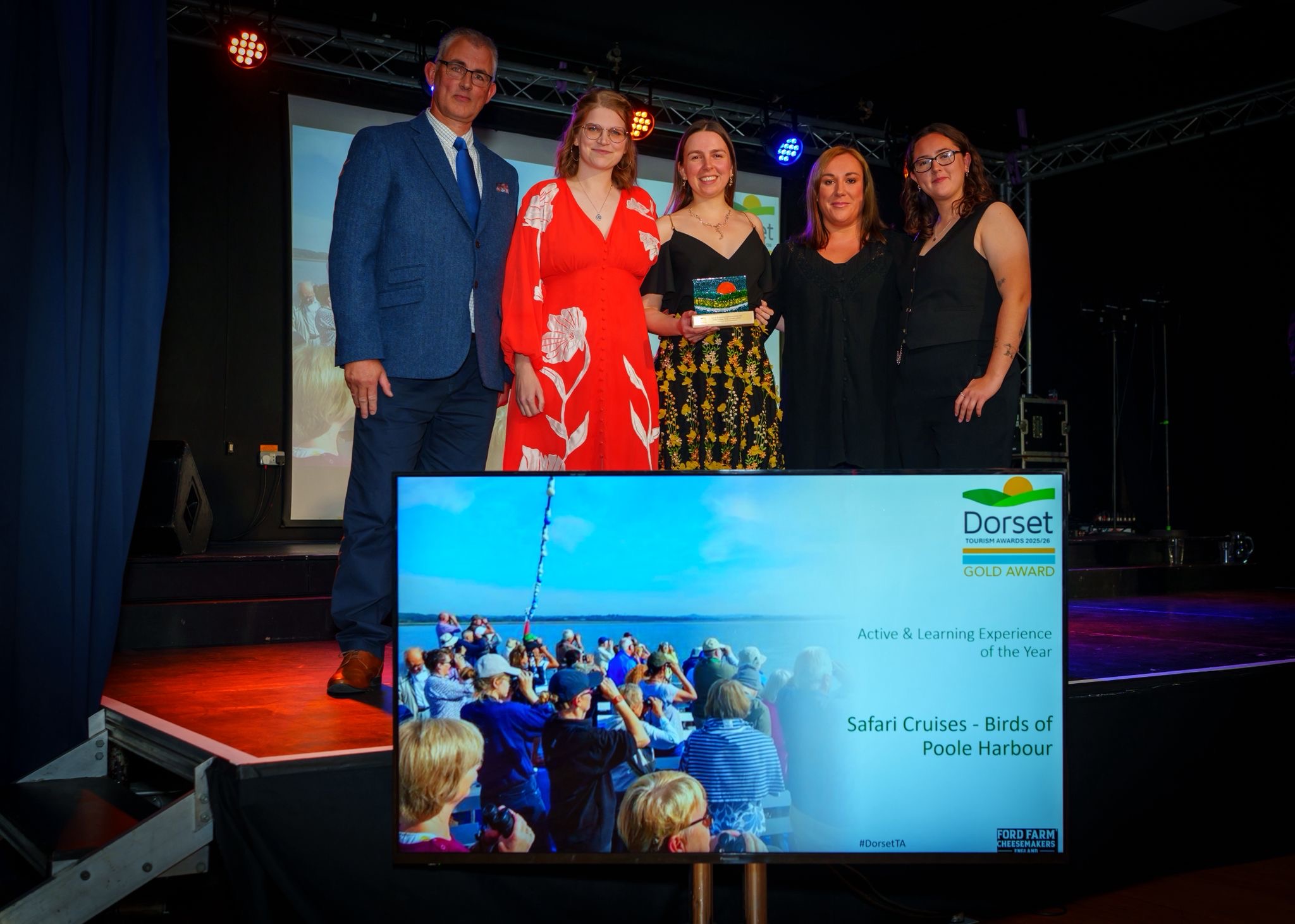
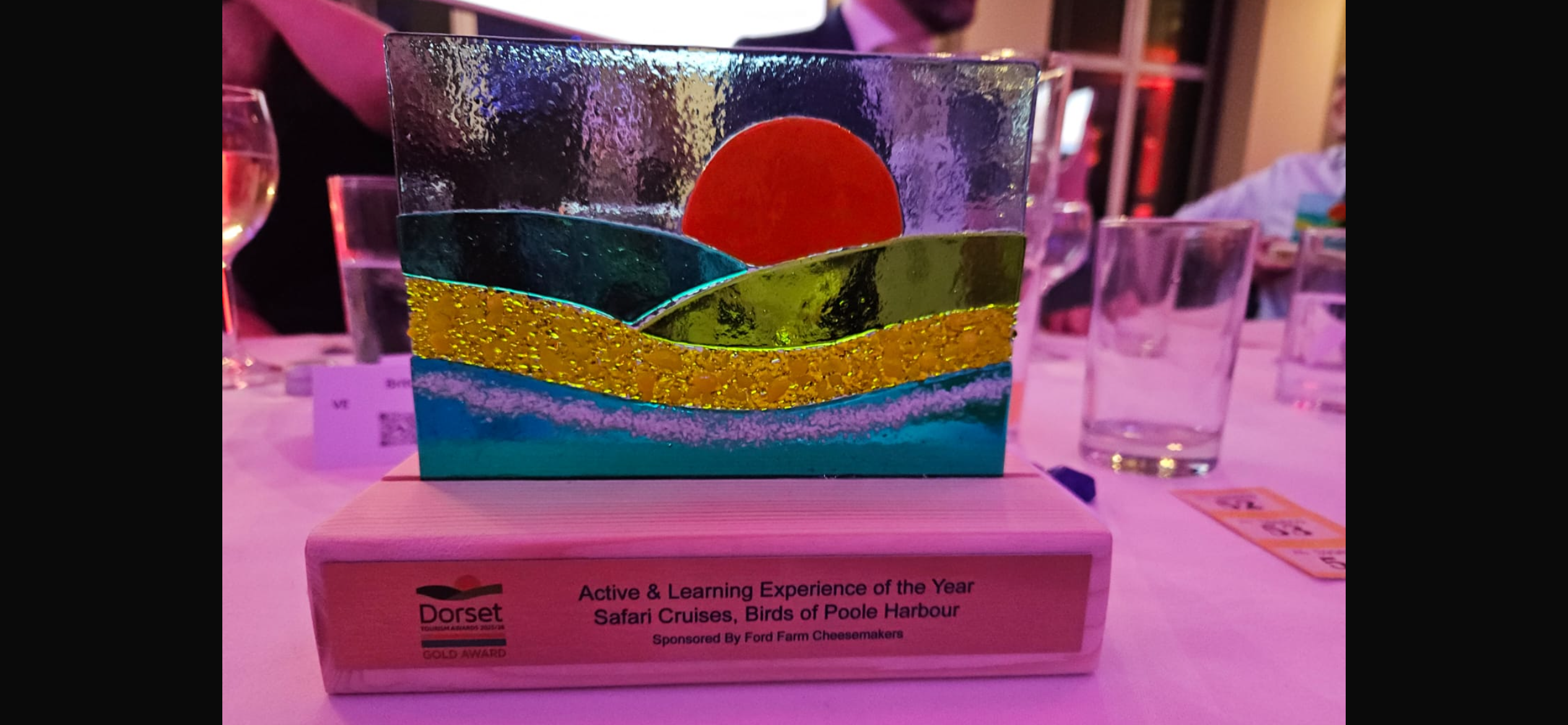
Birds of Poole Harbour win GOLD AWARD for second year in a row at Dorset Tourism Awards

Posted on: October 17th, 2025 by Birds of Poole Harbour
Wow! What a year its been! Not only has it been our best ever year in terms of conservation successes with two south coast Osprey nests establishing producing six young, plus another of our males seemingly setting up territory in Poole Harbour this summer, plus our first ever Osprey chick to fledge from Poole now nesting up in the East Midlands, and……the continued growth of our School Bird Boat project, our Young Birders Club and our Swift City Project.
Well, last night thanks to the tireless hard work from our team and support from our volunteers and the kindness of the general public, we won the GOLD AWARD at the Dorset Tourism Award in the new Activity and Learning Experience of the year category for our ‘Safari Cruise’ series of trips that we host during the course of the year. We couldn’t do any of this without Greenslade Pleasure Boats Limited who provide the boats for all of our Safari Cruises, so a huge thank you to them and the incredible skills of all of their skippers.
A massive thanks too to the Dorset Tourism Awards for our award and recognising that Eco-tourism is a growing and important part of Dorsets future and economy.
Our focus of these trips isn’t just to show people birds….we’re not a bird tour operator. Rather we seek to showcase and inspire the public on the many examples of species recovery that we’re lucky enough to experience here in Poole Harbour…..from returning White-tailed Eagles and Ospreys, recovering populations of Avocet, Marsh Harrier and wetland birds to highlighting the landscape scale land recovery being carried out by local conservation NGO’s and landowners.
This award goes out to everyone in the Poole Harbour, Purbeck and South Dorset area who are all working incredibly hard to transform this phenomenal part of Dorset into a thriving, nature rich landscape. There’s still a huge amount of work left to do, and the multiple partnerships that are now established should be able to grow and strengthen, enabling our county to see a continued recovery of many species, and hopefully inspiring other areas of the country to follow suit.
Bring on 2026…..we can’t wait!!

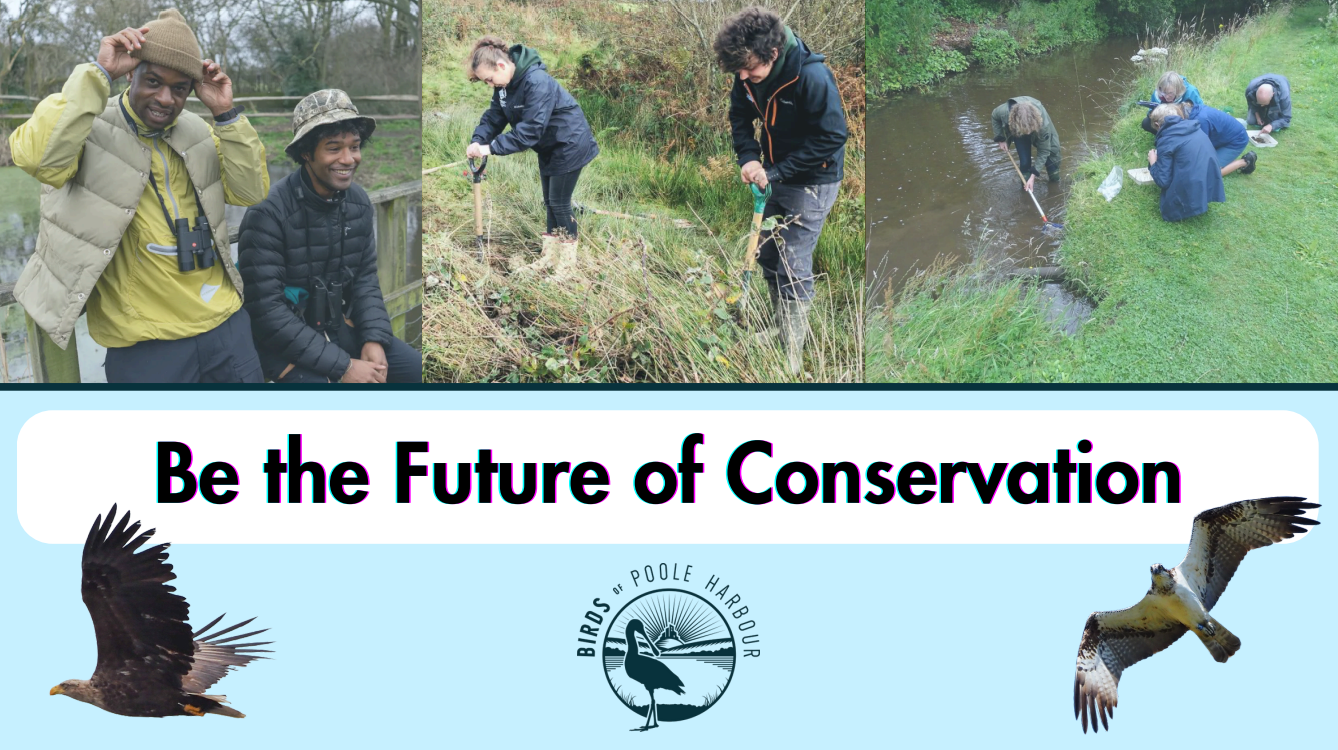
Inspiring the Next Generation: Launch of Our Conservation Careers Talk Project!

Posted on: October 7th, 2025 by Birds of Poole Harbour

We are excited to announce a brand new project to deliver 10 inspiring Conservation Careers Talks to secondary schools, sixth forms, and colleges in the Poole area, free of charge. They will be delivered from November to March.

The talks will explore how young people can be involved with nature’s recovery in Dorset, the variety of roles available, and include advice on how to gain experience in the conservation field. With so many exciting projects happening in southern England, now is a fantastic time to get involved. We’ll discuss what opportunities are available locally, including grants, volunteering, and our very own Young Birders Club. There will also be time to ask plenty of questions, with a Q&A at the end.

We hope to inspire and encourage the next generation to pursue a career in conservation whilst raising awareness that working with nature is for everyone, no matter your background.

If you’re interested in a conservation careers talk for your school, please email schools@birdsofpooleharbour.co.uk

This project is kindly funded by the Cameron Bespolka Trust, who also support our free Young Birders Club for 13-18 year olds.


Record number of wild White-tailed Eagle chicks hatched in England this year with first chick to fledge in Dorset for over 240 years.

Posted on: August 11th, 2025 by Birds of Poole Harbour

Our friends at the Roy Dennis Wildlife foundation and Forestry England have an exciting update for you all:

PRESS RELEASE

A record THREE White-tailed Eagle chicks have successfully fledged from TWO wild nests in England. The chicks were reared by White-tailed Eagles that were released as part of the ground breaking conservation project by Forestry England and the Roy Dennis Wildlife Foundation to return this lost species to England.

Two different pairs of White-tailed Eagles successfully bred this year. This included the first chick in Dorset for over 240 years, and two chicks raised in a nest in Sussex.

A single male chick (G834) fledged from a nest in Dorset. The parent birds – G463 (male) and G466 (female) released in 2020 – settled in the county and paired up in 2023. This is their first successful breeding attempt and made more remarkable by the fact that the male adult bird has only one leg after it lost this four years ago.

Two chicks, both females (G841 and G842), fledged this year from a nest in Sussex. Both are the offspring of two white-tailed eagles released by the project in 2020. The parent birds – G405 and G471 – were the same pairing that bred in 2023 and 2024.

This year’s successful breeding brings the number of these iconic birds born in the wild through the project to six. In 2023 a single chick was born, the first in England since the eighteenth century when the species was lost due to persecution. A further two chicks were born in the summer of 2024.

All of the chicks are fitted with satellite tags so that the project team can track their progress. Over the last year they have used satellite data to follow the fledglings as they have explored widely across the UK.

White-tailed Eagles typically reach breeding maturity at around four or five years old. From the birds released by the project, three pairs have formed and established territories in southern England. Several of the younger birds are also present in potential future breeding areas typically close to freshwater wetlands or the coast, where the birds can catch fish, which is their preferred food. In time, it is hoped that a population of 6-10 breeding pairs will become established within 60 kilometres of the release site on the Isle of Wight.

Roy Dennis OBE, Founder of the Roy Dennis Wildlife Foundation, said:

“We are delighted to see another year of successful breeding and that two pairs have now reached this key stage. This is a long-term project, and it will take some years before the population is fully restored but the progress made over the last year has been incredibly encouraging. We have some well-established pairs and two that are actively breeding. We hope to build on this progress, and I’m really pleased that we have been able to release an additional 8 birds this year to further boost the population.”

“I always find it particularly rewarding to see so much support for these magnificent birds and the positive impact they are having on so many people’s relationship with the natural world.”

Steve Egerton-Read, White-Tailed Eagle Project Officer for Forestry England, said:

“We have been patiently monitoring these nests for many months and hoping they would be successful. It is always such an exciting time but also incredibly nerve wracking! This was especially the case for the pair of eagles in Dorset who were first time parents. It was an incredible moment when we caught our first glimpse of that tiny fluffy chick in the nest, but equally, it is anxious time as the parents get to grips with what they need to do. Ultimately, it has been so rewarding to see this pair of eagles, often spotted in and around Dorset, care for the chick all the way through to it fledging the nest. Now it won’t be long until he is starting his own journey and hopefully one day, he will breed somewhere in southern England.

“Returning lost species like the White-tailed Eagle is a key part of Forestry England’s approach to restoring biodiversity and helping nature to recover. We hope that in years to come these iconic birds will become a much more common sight, inspiring future generations and deepening their connection with nature.”

White-tailed Eagles are Britain’s largest birds of prey with a wingspan of up to 2.5 metres and were once widespread across England. Human persecution caused their extinction, with the last pair breeding in southern England in 1780. In 2019, Forestry England and the Roy Dennis Wildlife Foundation began reintroducing these iconic birds to the English landscape.

To date, 45 young White-tailed Eagles have been released. This includes eight birds released this summer from the team’s base on the Isle of Wight.

The reintroduction of White-tailed Eagles is conducted under licence from Natural England, the Government’s wildlife licensing authority. Birds for release are collected from wild nests in Scotland under licence from NatureScot before being transported to England with valuable support from Civil Air Support. The birds are subsequently reared and released on the Isle of Wight, all birds released by the project are fitted with satellite tags.

White-tailed Eagles are a protected species under the Wildlife and Countryside Act (1981). Disturbing, destroying or interfering with them and their nests are criminal offences. The specific locations of this year’s nests are not being disclosed for the welfare of the birds and to prevent any disturbance to them or the landowner this year or if the birds return to breed at the same location.

ENDS

This is of course brilliant news and such a huge milestone for the project. Over the last 5-years the White-tailed Eagles from the reintroduction program have given many thousands of people a fantastic set of nature experiences across the Dorset landscape and from our series of boat trips during the year. Therefore it’s incredibly important not to discuss, suggest, speculate or rumour where nest sites may be online or on social media as it’s irrelevant to the success. Whats important is the fact they’ve found somewhere safe and secure to breed and all being well will do so for years to come.

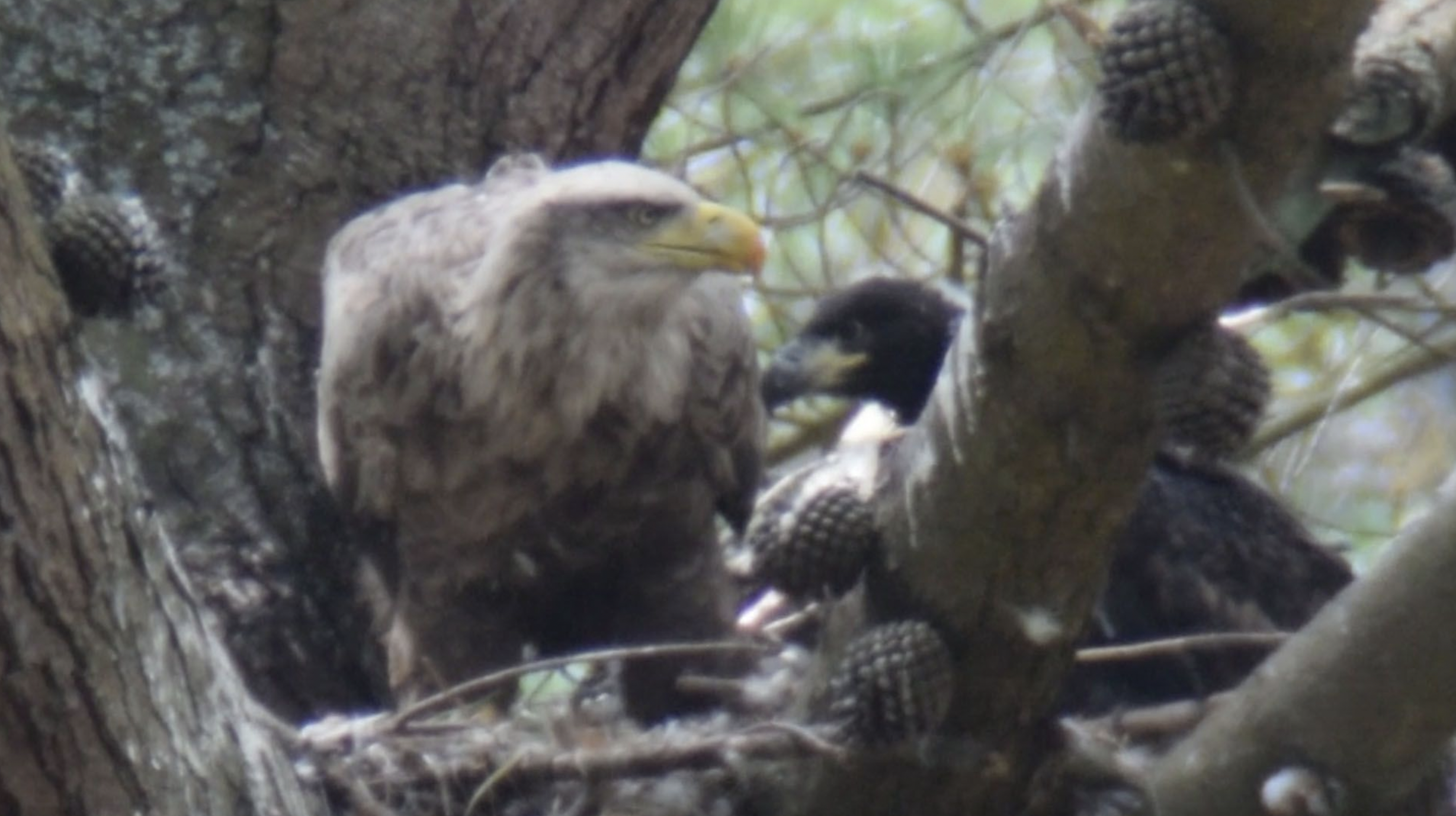
Adult White-tailed Eagle G466 feeding chick at Dorset nest – Forestry England


Rewilding Black Vultures: New Ariant Biological Reserve Tours in Mallorca.

Posted on: March 3rd, 2025 by Birds of Poole Harbour

This is really exciting!

Are you visiting Mallorca this spring or autumn? For the first time ever our friends at the Fundación Vida Silvestre Mediterránea (FVSM) organisation are opening the gates to their private Ariant Biological Reserve in the NW of Mallorca, where they’ll be hosting a series of guided Vulture and birding experiences for small groups of guests. Ariant is a stunning 1000ha biological reserve with nature recovery and biodiversity protection at the very core of its landscape. The FVSM and Black Vulture Conservation Foundation (BVCF) were responsible for the recovery of Black Vulture across Mallorca and are now looking to showcase and educate the public on Black and Griffon Vulture protection in Mallorca in a safe and controlled environment, with Ariant being one off the best places in Mallorca to see Vultures along with a whole range of other bird species. Be guided by and hear direct from the teams involved in the Black Vultures recovery and who manage Ariant as they guide you around the reserve as you watch wild vultures on the wing, in one of the most pristine and beautiful landscapes on the island. These new tours also include the free use of binoculars and mid-way we’ll be stopping for a traditional Mallorcan snacks and refreshments. There’s no doubt these tours will be an excellent new addition to your birding itinerary and holiday in Mallorca. Places are limited for each session, so be sure to book early to avoid disappointment.

For full information about these exciting new tours visit the FVSM website here, and scroll down for the English translation of the tour information:

https://fvsm.eu/ofrecemos/excursion-de-observacion-de-buitres/#ingles%20recuperacion

For enquiries or to book onto a session please email: educacion@procustodia.org

Job Advert: BoPH Manager Maternity Cover

Posted on: February 11th, 2025 by Birds of Poole Harbour

Birds of Poole Harbour (BoPH) is a small Dorset-based charity that was established in 2013. Our vision is to inspire hope for nature through delivering innovative conservation projects and high-quality outreach events that enthuse the public about the exciting environmental work happening in South Dorset.

In the last three years our charity has grown significantly, accelerated by the successes of local reintroduction projects, and we are now connecting more people with Poole Harbour’s birdlife than ever before. Our team is driven by our passion for the local area and its wildlife, recognising the importance of being proactive in response to challenges faced by our sector and the natural world.

We are looking for maternity cover for the role of BoPH Manager, starting in the spring of 2025. Within this role, you will be facilitating the continuation of our charity’s growth at this exciting time, and providing support to our team of staff and volunteers. This is a varied role, with opportunities to be involved in both our conservation and engagement work. We are looking for someone to lead our team with an understanding of our charity’s ethos and share our core values of kindness, authenticity, ambition and effectiveness.

Position: Birds of Poole Harbour Manager

Hours: 40 hours per week, with occasional weekend work required. This position would run from 14th April 2025 to 31st May 2026, with some flexibility if required.

Salary: £36,500 per annum

Location: Primarily Poole and Wareham-based, with occasional optional home-working

Annual Leave: 28 days per annum, including bank holidays

Key Responsibilities:


Job Specification:

To be successful in this position, these are the skills and experience that are most important:

It would also be advantageous to have the following skills and experience:


If you would like to apply, please email our Operations Manager Laura at laura@birdsofpooleharbour.co.uk with a CV (2 pages maximum) and a PDF with answers to the following questions:

Closing date: 9am on Wednesday 26th February

Interviews commencing W/B 3rd March with the option for online interviews available.

If you have any questions or queries about the role or application process, please contact our BoPH Manager Liv Elwood via liv@birdsofpooleharbour.co.uk. Birds of Poole Harbour are an equal opportunities employer and are happy to provide additional information or accommodations within our hiring practices to support applicants with additional needs.

Job Advert: Osprey Engagement Assistant

Posted on: February 11th, 2025 by Birds of Poole Harbour

Birds of Poole Harbour (BoPH) is a small Dorset-based charity that was established in 2013. Our vision is to inspire hope for nature through delivering innovative conservation projects and high-quality outreach events that enthuse the public about the exciting environmental work happening in South Dorset.

In the last three years our charity has grown significantly, accelerated by the successes of local reintroduction projects, and we are now connecting more people with Poole Harbour’s birdlife than ever before. Our team is driven by our passion for the local area and its wildlife, recognising the importance of being proactive in response to challenges faced by our sector and the natural world. 

We are looking for an enthusiastic part-time Osprey Engagement Assistant to support our team in delivering our public engagement offer through the Spring and Summer of 2025.

Position: Osprey Engagement Assistant

Hours: 15 hours per week, w/b 14th April – 31st August. Due to the nature of our events, this position will require working regular Saturdays and outside of regular working hours

Salary: £12.60 per hour (Real Living Wage)

Location: Wareham and Poole based

Annual Leave: 33 hours

What you’ll be working on: You’ll be helping our team to deliver an ambitious events schedule through the spring and summer, including our Carey Osprey Tours led in partnership with Careys Secret Garden, as well as our Osprey Cruises during August.

During the spring and early summer you will primarily be responsible for delivering three 2-hour sessions per day to view and interpret the nesting Ospreys at Careys Secret Garden with groups of up to 12 people, informing them about the exciting Poole Harbour Osprey Translocation Project, the nesting pair, and engaging them with the other birdlife that can be found onsite. Later in the summer, you will provide support with spotting and commentary on our award-winning Osprey Cruises around Poole Harbour. This role will be well-suited to an aspiring and enthusiastic ornithologist with excellent communication skills and a good knowledge of British birds.


Job Requirements:

To be successful in this position, these are the skills and experience that are most important:

Desirable Skills and Experience:

Full training will be provided and more detail on our project work and events can be found here: www.birdsofpooleharbour.co.uk. Please note that this position will be offered subject to the successful return of the nesting pair of Osprey to Careys Secret Garden, and that we will be unable to fulfil the role if they do not return.


If you would like to apply, please email our Operations Manager Laura at laura@birdsofpooleharbour.co.uk with a CV (2 pages maximum) and a PDF with answers to the following questions:

Closing date: 9am on Monday 3rd March

Interviews commencing W/B 10th March with the option for online interviews available. Please note that the interview will involve a UK bird species identification test.

If you have any questions or queries about the role or application process, please contact our BoPH Manager Liv via liv@birdsofpooleharbour.co.uk. Birds of Poole Harbour are an equal opportunities employer and are happy to provide more information or accommodations within our hiring practices to support applicants with additional needs.


School Bird Boat Binoculars Fundraiser!

Posted on: December 6th, 2024 by Birds of Poole Harbour

Every winter for the last 11 years, our charity takes out up to 1200 school children around Poole Harbour on School Bird Boats to give young people the opportunity to explore and learn about the fantastic wildlife and local area they live in. All of these children come from local primary schools and join us completely free of charge thanks to sponsorship from local cosmetics company Lush. All trips leave from Poole Quay with Greenslades Pleasure Boats to explore a large part of the harbour and its special habitats for 2 hours, led by our staff and volunteers.


We provide a huge amount of information and learning on topics like bird migration, adaptations, human livelihoods, the SPA (Special Protection Area), and much more so that the children understand and appreciate the local area and wildlife. The children go away being able to identify an Avocet from a Black-tailed Godwit, a Great Black-Backed Gull from a Herring Gull, and a Cormorant from a Shag. They do all of this while keeping a list of everything we saw, contributing to the surveying and protections within the harbour. This is a great learning tool with so many of the pupils taking great interest and going on to find more of a passion for the natural world in their classrooms and homes. 


In recent years, species like White-tailed Eagles, Marsh Harrier and Peregrine Falcon being regular sightings on our School Bird Boats, making nature recovery and species reintroductions a major topic and feature the trips. This would have been unimaginable just a few years ago and is a fantastic experience for young people, demonstrating nature recovery in action for the next generation.


For the duration of our trips, each of the children receives a pair of binoculars to bring them closer to the wildlife that we encounter. After 10 years of running this project, many of our binoculars have become damaged or worn out. We are now hoping to replace all of our school optics with good quality binoculars that are well-suited for young birders, so that every child can have the best experience and opportunity to see great birds on our trips. In the last year, Opticron has already kindly replaced nearly half of the binoculars used in the project free of charge, helping us to reach this goal. We are now looking to replace the remaining old binoculars, by launching a public fundraiser in the run-up to Christmas. We will be donating any of our usable old binoculars to schools for use in their classrooms, lessons and holiday birdwatching kits.


We’d greatly appreciate any support that you can give so that we can continue to run this free school bird boat project, inspiring the next generation of nature conservationists. Thank you!

This winter we will have taken out 19 different schools on 26 separate trips, with almost 1300 children coming on board. Some of the comments we had from last season have included: ‘It was the best trip ever!’, ‘I loved it’, ‘our class birdwatching kit was in high demand for the Easter holiday’ and ‘the children were all extremely inspired’. Many of the schools have gone on to watch the Birds of Poole Harbour Osprey Webcams during school time, another great learning tool for the kids and fantastic for them to follow a local conservation success story.

Photo by Alison Copland

Poole Harbour Osprey Season 2024: A celebratory overview of the Carey Osprey nest.

Posted on: November 6th, 2024 by Birds of Poole Harbour

In 2022 Ospreys nested in Southern Britain again for the first time in 180 years. The pair known as female CJ7 and male 022 set up their historic first territory at the Carey Secret Garden, and were a result of a 5-year reintroduction program which was carried out in partnership between our Birds of Poole Harbour charity and the Roy Dennis Wildlife Foundation. In the first year of nesting (2022) the pair raised two young, ringed 5H1 and 5H2. In the second year of nesting (2023) they raised three young, ringed 5H3, 5H4 and 5H5. Then, incredibly, the summer of 2024 saw an amazing FOUR young being raised, ringed 5R1, 5R2, 5R3 and 5H6. This was a historic moment and to date, seems to have been the only Osprey nest in the country that year that raised four youngsters. There were several exciting elements to this story. Firstly, that when the chicks were ringed it was logged that all four youngsters were male, which is a great situation for the local area, as it’s the males that tend to return to their ‘local’ areas in future years to set up territories of their own. Secondly, the whole season from arrival to departure was captured on our HD livestream camera, and was viewed live by thousands of viewers over the course of the season.

Now that we’re well into the start of winter it can be easy to forget just how special the 2024 season was, so, to celebrate, we’ve created a five episode series of ‘Osprey Season 2024’ which highlights every intimate moment from start to finish and will allow you all to re-live the best moments from the nest this summer.

Over the next 5-weeks we’ll release a new episode every Friday evening which will showcase each phase of the season, starting with tonights Episode 1: The Arrival

Special thanks must go to our volunteer Alison Copland who spent almost a month cutting and editing all the footage together.

We hope you enjoy it as much as we have!

Carey Osprey nest Season 2024: Part 1 – Arrival, egg laying and egg hatching

Carey Osprey nest Season 2024: Part 2 – They grow up so fast!!

Carey Osprey nest Season 2024: Part 3 – Fish fights and first fledging

Carey Osprey nest Season 2024: Part 4 – Post fledging madness!!!

Carey Osprey nest Season 2024: Part 5 – Learning to fly and a sad goodbye

Male Osprey ‘374’ Update:

Posted on: October 10th, 2024 by Birds of Poole Harbour

What a season it’s been, with our harbour pair 022 and CJ7 fledging 4 hardy, healthy strong youngsters this summer, which as far as we know, all migrated away safely by the beginning of September. Since 2022, 022 and CJ7 have now fledged 9 young in total from the harbour nest which is a great result, and we look forward to seeing the safe return of some of these individuals over the next few years. Of course, this spring we did see our first wild-fledged youngster arrive back, with female 5H1 dropping in to the harbour briefly at the end of May before then moving off and being seen at several sites across the country including places in Wales, Rutland and Northamptonshire. For those that have been following our Osprey story since the very beginning will know that some of our female Ospreys which were released as part of the project are now breeding in Wales. If you add the number of young that have fledged from those nests too, then the total number of young Osprey that have fledged as a direct result of our Poole Harbour Translocation Project now stands at 25 individuals. This is fantastic news, as this is 25 more young Ospreys that can potentially enter the UK population which wouldn’t have had it not been for the project.

Of course, there’s still a long way to go, and still, with only one nest here in Dorset/Southern Britain the situation is fragile, because by no means does a single nest secure the bases of a population…..we need more!

Last spring another of our male Ospreys returned to Poole Harbour, a bird called 374. He did exactly what we’d expect a 2-year old male Osprey to do which was to return a bit later in the spring, explore the wider landscape before then showing an interest in some of our harbour nest platforms. During June, July and August of 2023, male 374 started showing real interest in setting up a new territory within Poole Harbour and was seen carrying sticks to various nests which is what we hoped he would do. He spent most of that time on his own, and other than engaging with a few migrant Osprey he failed to draw in a potential mate. He then left in late August 2023 and all our fingers were crossed for his safe return in spring 2024, where he had the potential to find a new mate.

As the long, cold winter came to an end and finally gave way to spring, we saw an incredibly early return of our breeding pair with 022 arriving on March 26th and CJ7 arriving the following day on March 27th. They both got straight down to business, re-building the nest, mating and eventually laying eggs. This was a great start, but what about 374? Was he going to return and could we see two nests potentially? March turned into April and each day we waited, hoping for a photo to come through from one of our Osprey nest trail cameras. It felt like an eternity, but finally on April 17th we got a photo of a male, blue-ringed Osprey on one of our nests……YES!! It was 374. He was back.

Surely it was now just a waiting game, as we’d seen a dramatic increase in the number of wandering females who were now showing an interest in Poole Harbour because of the established nest. However, it didn’t quite go to plan. No sooner had he arrived, he then disappeared and wasn’t seen again for 4 weeks! Where had he gone? Why didn’t he stick around? It wasn’t until later in May we finally had some photos of him sent to us by a photographer who had seen him at Fishlake Meadows in Romsey. Phew! At least we knew he was Ok, but we’d rather he came ‘home’. Other than that brief encounter at Fishlake Meadows he soon disappeared again and wasn’t seen again for several weeks. That was until he then turned up back in Poole Harbour in July, however this time with a female in tow. As it transpired it was a blue-ringed female from Rutland Water called ‘1H1’. A perfect mate for him considering CJ7 also came from the Rutland population. Although by now it was too late in the season for 374 and 1H1 to try and breed, there was definitely enough time to build and develop a bond and search out suitable potential nest sites for next spring. It all started looking really exciting when the pair went back to his favourite nest platform in the harbour, where they were both adding sticks over a few days, with potential breeding for next year looking a very real possibility. That was until our local male 022 showed up and very quickly took a disliking to their presence and aggressively and vocally soon saw them off out of the area. Now we understand why 374 didn’t stick around much in the spring!

Male Osprey 374 and female 1H1 on Poole Harbour nest platform in mid-July before being ‘seen off’ by local male Osprey 022

It all went quiet again and we weren’t sure where the ‘new pair’ were until we received a tip off about a pair being seen at an undisclosed site just north of the harbour. So, our team went and staked out the location whilst liaising with our source of information and sure enough a male and female Osprey were active at the site and seemed to be interested in the area. We mobilised really quickly and spoke with a few local landowners about getting a nest platform built ASAP, as we know this can help and speed up the process of Ospreys setting up territories. We found a willing landowner and built the nest on July 30th this summer which is on completely private and inaccessible land which is just what the Ospreys need.

Paul Morton and Tim Mackrill carrying out the ‘strength test’ of the new nest. Stand in the middle and see what happens! 

As always, we also installed one of our motion sensor 4G trail cameras to see if 374, 1H1 or any Ospreys took a liking to our new nest during the rest of the season. A couple of days went by and other than a few Stock Dove there had been no visits. Then, on August 3rd….Touch Down! 374 landed on the nest and seemed to be impressed with the new real estate that had appeared in the landscape. He spent the next few days visiting several times a day, moving sticks around and genuinely taking an interest in the new nest.

Male Osprey 374 landing on new nest for the first time

This was a great sign. But even better was on August 5th when he was then joined by female 1H1 who arrived eating a fish on the nest. No doubt caught and presented to her by 374 as part of their pair bonding. During the rest of August 374 and 1H1 visited the new nest every few days, adjusting sticks and seemingly making themselves at home. What a result. The last sighting of them on the nest was on August 26th which is when we assume they left on migration.

This is obviously great news for the project and we truly hope we see their safe return next spring. It’s important to remember though, that although this is an encouraging development, there’s no guarantee that a) either or both will return next year, or that b) this is where they’ll choose to nest next year. They could easily end up back here in Poole Harbour, find a new site, or even build their own nest somewhere. It may be that 374 even finds a new mate should 1H1 return late? Who knows? But that’s the magic of Ospreys. It’s always the unknown that keeps us guessing and intrigued.

So, until next spring, here are a few photos of 374 and 1H1 on the nest together in August this year.

Male Osprey 374 and female 1H1 on the new nest for the first time together on Aug 5th

Male Osprey 374 mantling on new nest as 1H1 does nest preparations

Poole Harbour Young Birders Club

Posted on: September 24th, 2024 by Birds of Poole Harbour

We’re launching an exciting new project for young people in the Poole Harbour area. We’ll be holding free monthly events for 13-18 year olds to learn about birds, wildlife, conservation and more. This will be a fantastic opportunity to inspire the next generation, with in-person events and an engaging community to connect young people with nature.

The project has been very kindly supported by the Cameron Bespolka Trust who do a huge amount of work with young people and nature. They have provided funding to allow us to run the project, host the events and provide equipment and transport, and we are very grateful for their continued support. You can find out more about their work here.

We’ll be hosting a range of exciting free events aimed at giving young people the opportunity to learn and access nature in a welcoming manner. These will include:


We want the project to be as accessible and inclusive as possible so no prior experience or knowledge is required and everyone is welcome. Joining the club and all the events will be free and we will even be providing support for transport needs, including minibuses and the opportunity for funding support for local travel to events.

Our first introductory event will be a Bird Ringing Demonstration at Careys Secret Garden in October half term and then some guided Bird ID Walks in November and December.

If you are interested in joining the Young Birders Club please head to the webpage to sign up for a free membership and access to the events. The events will be held on a first come first serve basis, so please ensure you purchase free tickets to guarantee a place.

Please share this widely with anyone you think may be interested as we want to engage with as many young people as possible! Thank you!

Call 01202 641 003