
It’s been a phenomenally successful season for the Poole Harbour Osprey Project with record number of chicks fledged from Poole Harbour-linked nests!
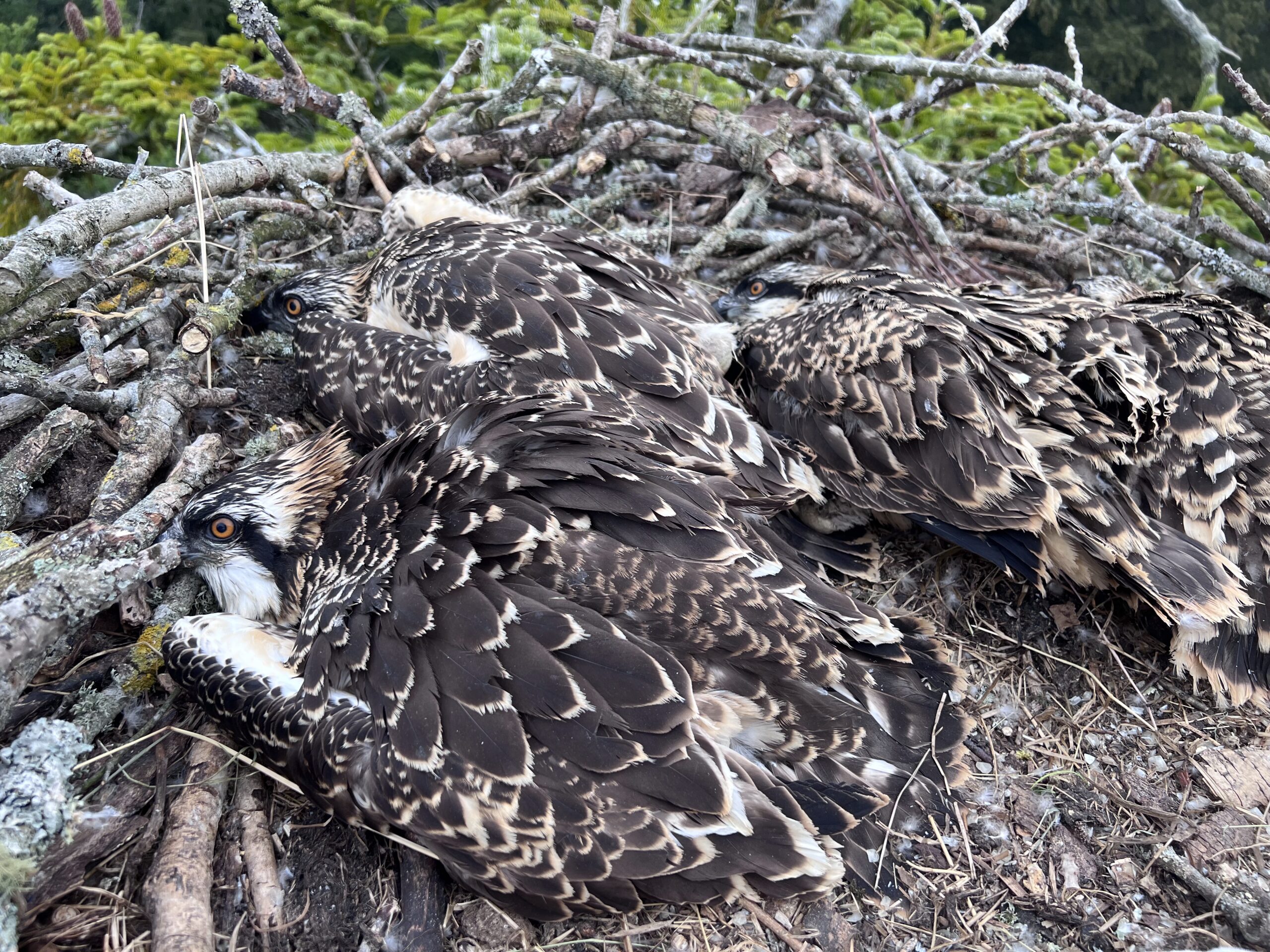
Female CJ7 (centre) and her 4 chicks 6T6, 6T7, 6T8 and 6T9
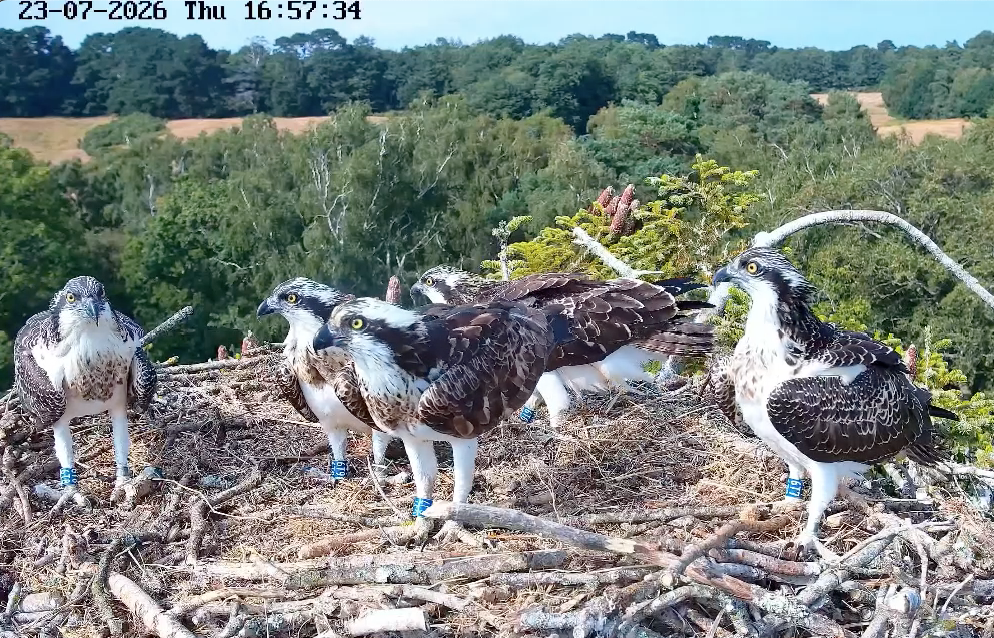
Thousands of people have watched the Carey Osprey nest live webcam and over 1500 people have come to Carey’s Secret Garden to see the nesting birds in person from our Osprey Tours. This nest, the first nesting pair of Ospreys on the south coast of England for over 180 years, has once again produced 4 healthy chicks, for the third year running!
Ospreys generally only have 1-3 chicks and less than 1% of Ospreys produce as many as 4 chicks. From eldest to youngest the chicks were ringed 6T7, 6T6, 6T8 & 6T9. In contrast to the last couple of years, this year there were three female chicks and one male (6T6). This is another fantastic result, and represents another enormous boost for the South Coast population. Over the last 5 years of breeding at this nest, CJ7 and 022 have now produced a staggering 17 chicks.
Our ‘Nest Site 2′ was successful again this year, raising 3 healthy chicks, all of which are thought to be male. You can read more about the ringing of both nests of Ospreys at the page here. Please note that this nest site is at an undisclosed location for the safety of the birds and at the request of the land owner.
This handy family tree, which was kindly put together by our Osprey volunteer Alison Copland, is incredibly helpful for keeping track of all the birds as the population grows rapidly. 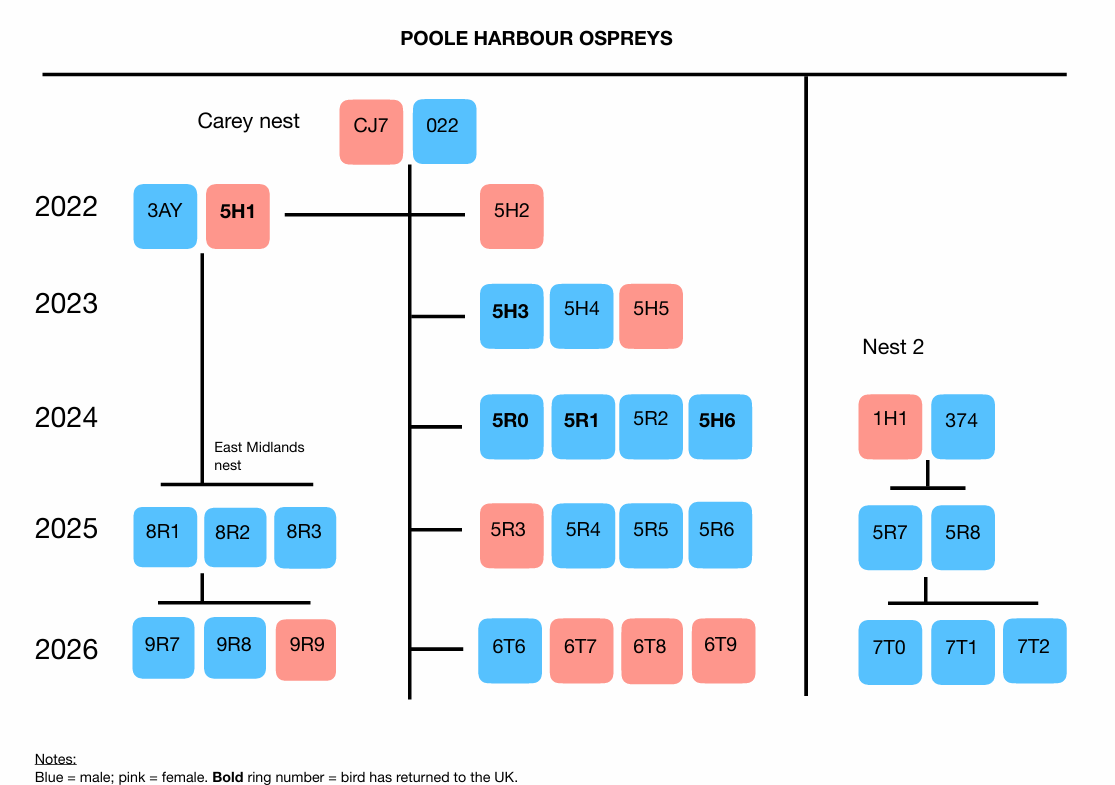
Our project also continues to have an impact beyond the local area. When we include the 3 nests in Wales and 1 in the East Midlands where Poole Harbour birds are breeding in our calculations, a total of 57 wild-fledged chicks have been produced thanks to our project over the last 6 years!
This is a huge success story and shows the increased connectivity between the English and Welsh Osprey populations as a result of the reintroduction project which was started in 2017 by Birds of Poole Harbour and the Roy Dennis Wildlife Foundation. Deputy manager at Birds of Poole Harbour Sam Ryde said “To have this number of Ospreys in this area is something we only dreamed of. They are now becoming a mainstay of Poole Harbour during the summer and it’s fantastic that so many people are able to see and enjoy these native birds of prey back in our landscape after a hiatus of 180 years”.
Another key highlight this season has been the number of returning young birds, providing hope and excitement that the breeding population will continue expanding in the coming years. Amazingly, we’ve had 4 different young males exploring the harbour and looking to set up a territory this summer: numbers which just a few years ago would have seemed impossible!
Carey Ospreys CJ7 (left) and 022 (right) first meeting this season on 26th March 2026
The male returne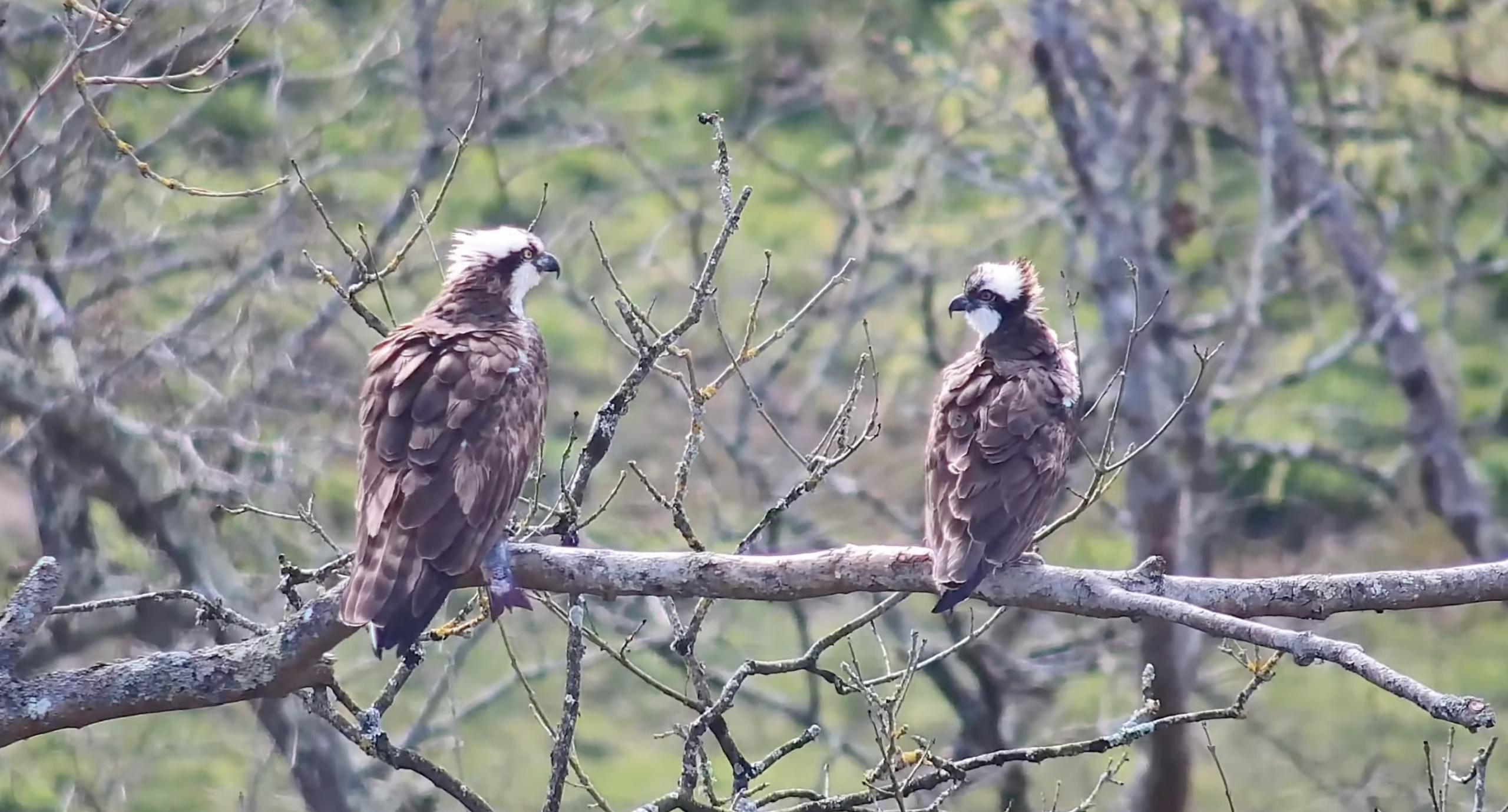 es all hatched at the Carey Nest, and are ringed 5H3 (3-year-old), 5R0 (2-year-old), 5R1 (2-year-old) and 5H6 (2-year-old). For the 2-year olds this is the first year we could have expected to see them back in the UK since they left in 2024 (Ospreys spend their first 2 winters in West Africa), so it’s fantastic to see so many of them back safely. The average return rate for young Ospreys is only ~30% because of their perilous migration and the challenging conditions they encounter on their wintering grounds. So, to have 75%(!) of chicks make it back from the 2024 cohort (4 chicks in total) is phenomenal news and speaks to the condition and strength of those birds when they left on migration.
Though most of these males were too young to breed this year, all four have shown really encouraging signs for future years, regularly visiting the pair at Carey and prospecting for potential nest sites of their own. There are a number of artificial nests available for them to use in the surrounding area, which we and other organisations have built, but we plan to keep building new ones over this autumn and winter to provide plenty of options for future pairs.
Excitingly, the young males have managed to attract the attention of several females, including a young female ringed 6J8. She is a 2-year old Osprey from the Tweed Valley in Scotland, nicknamed ‘Teddy’. She’s shown a lot of interest in the harbour and has the pick of 4 males to pair up with for next year if she decides to breed here! Female Ospreys tend to move away from their birthplace into areas where there are already other breeding Ospreys (conspecific attraction) where as male Ospreys tend to come back to breed close to where they’re born (natal philopatry). These behaviours reduce the possibility of inbreeding and are very important for the genetic health of the overall population. This helps to explain why so many of the males in Poole Harbour are from the area whilst the females are often drawn in from elsewhere.
Female Osprey 6J8 from our Summer Safari Cruise – Harry McBride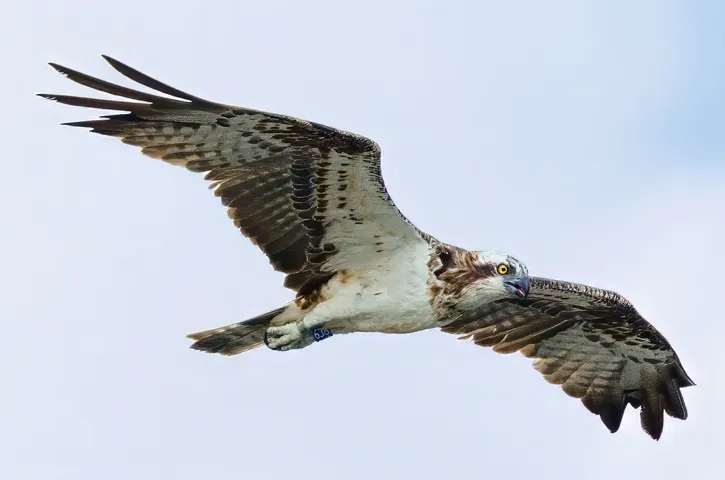
Overall it’s been another fantastic season with 7 Osprey chicks fledged in the south of England and 16 chicks in total linked to the Poole Harbour project. Thank you to everyone who has been a part of it and made it a success, whether you’ve watched the web camera, attended our events, or donated to our work. We’re now starting to see our young fledged Ospreys exploring the harbour and we’re entering in to peak Osprey migration time on the south coast (August to early September).
This is when we run our back-to-back Osprey Cruises hoping to catch up with the dozens of Ospreys that use the harbour as a stop-off station as they fish and interact with other birds. We may even see the kleptoparasitism by the White-tailed Eagles as they steal fish from young Ospreys!
If you would like to contribute to the ongoing costs of the Osprey Project so that we can keep running the web cameras, build new nest platforms, monitor the Ospreys and engage with people about the birds, please click here to Donate to the Osprey Project. Thank you!
Carey Osprey Chicks being ringed at the nest 1st July 2026
You might also like...
Harbour Update – 20/10/26
Hard going today with non-stop rain since first light! The only report today was of 27 Spoonbill in…
Find out moreHarbour Update – 19/10/26
With both Long-tailed Duck and Velvet Scoter having passed Portland and Kimmeridge Bay in the last 48 hours,…
Find out more
Call 01202 641 003
© 2026 Birds of Poole Harbour Registered Charity No. 1152615