
A chillier day today but pleasant none the less and with the Red-spotted Bluethroat still present it’s always going to be a good day. There were a few more migrant Common Sandpiper around today with individuals on Brownsea north shore and RSPB Arne Moors. Common Tern numbers continue to increase with c30 on the Brownsea Lagoon along with 27 Avocet which are really starting to look territorial and ‘settled’. It would be great to get multiple pairs stay and breed this summer. A White-tailed Eagle was high over Middlebere and male Osprey 022 was fishing in the Wareham Channel at around 10am. Another Pied Flycatcher was found today, this time at RSPB Arne near the overflow car park….thats the third this Spring already…most years we don’t even get one Spring record.
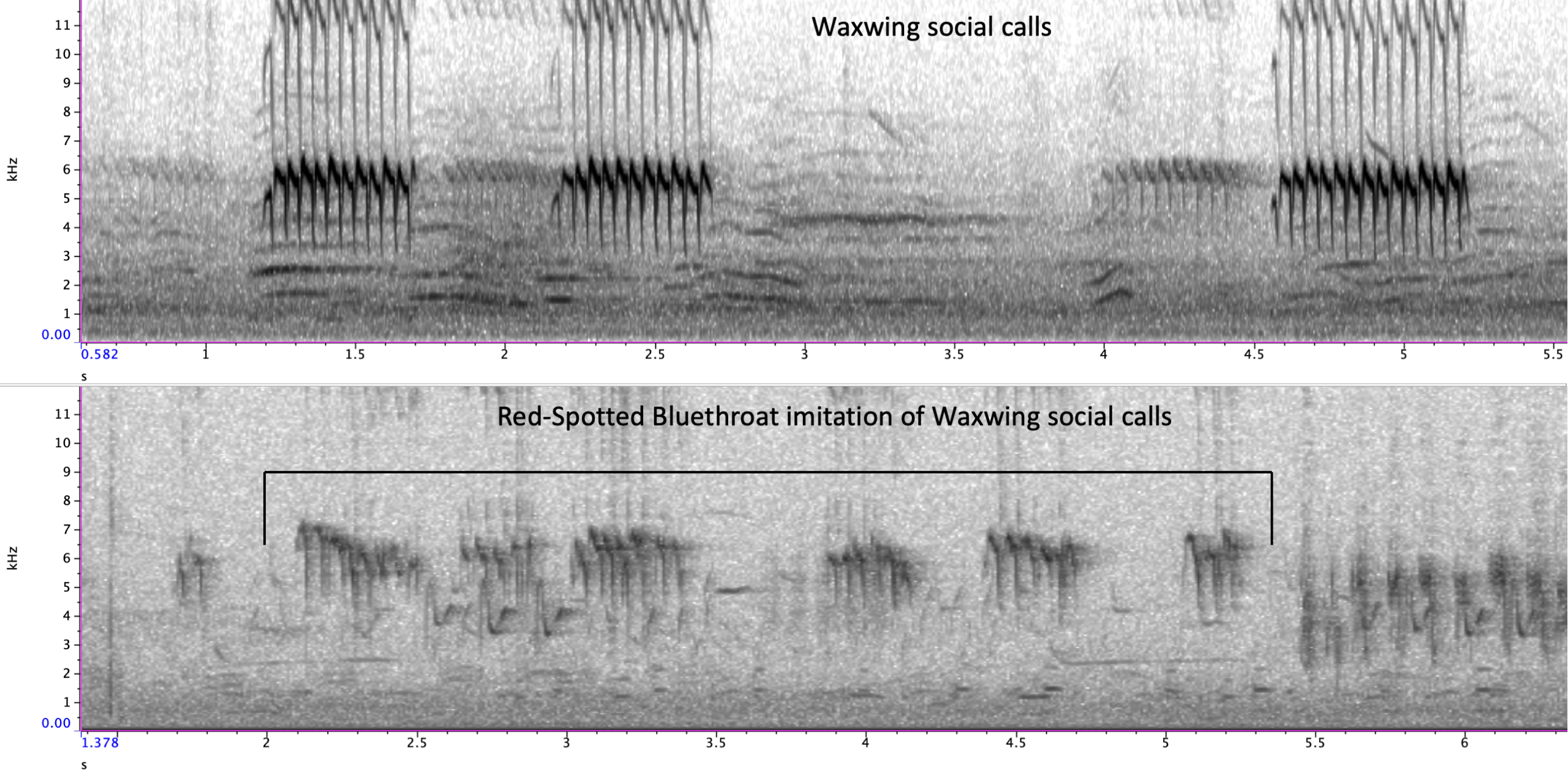
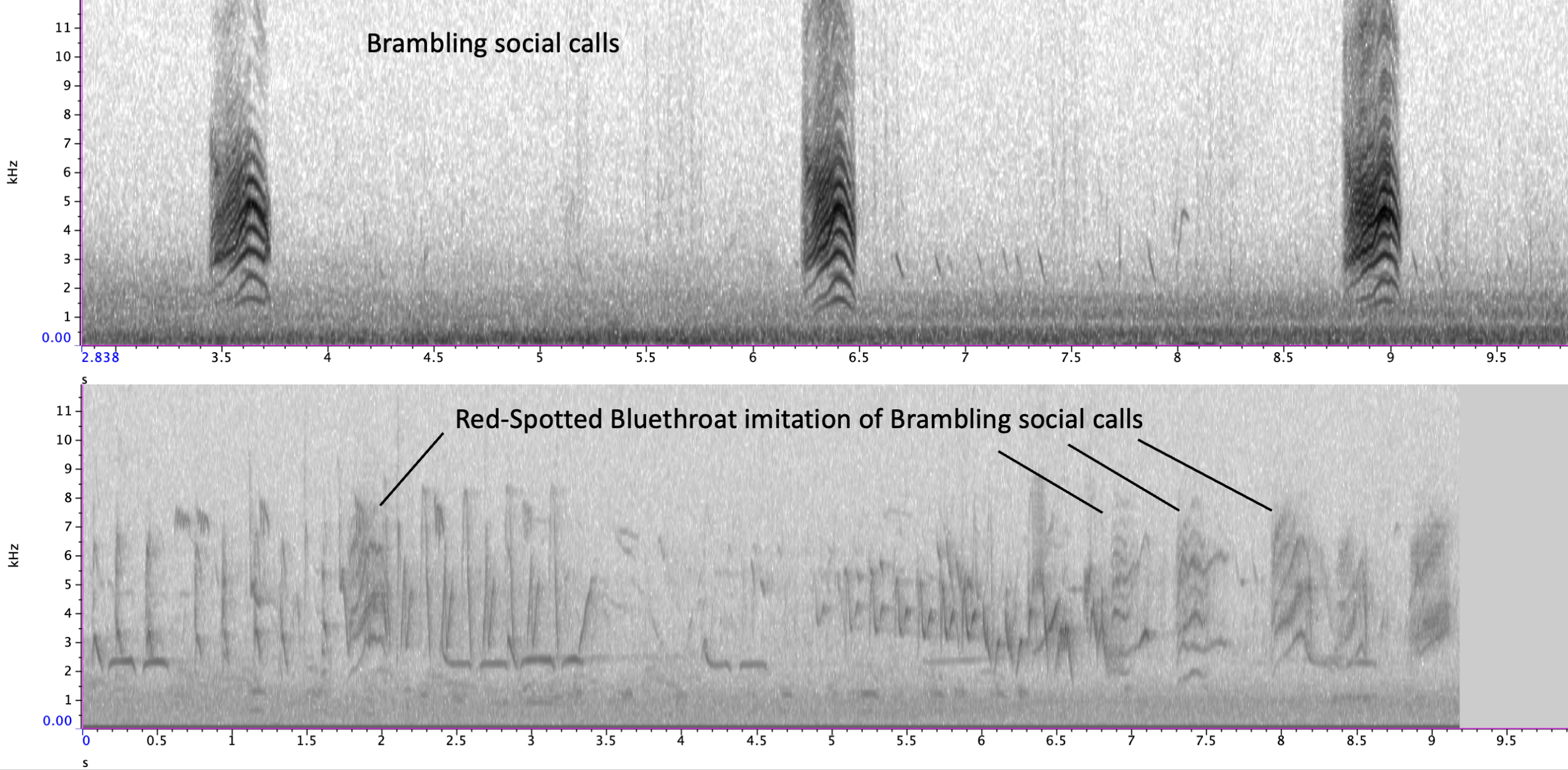
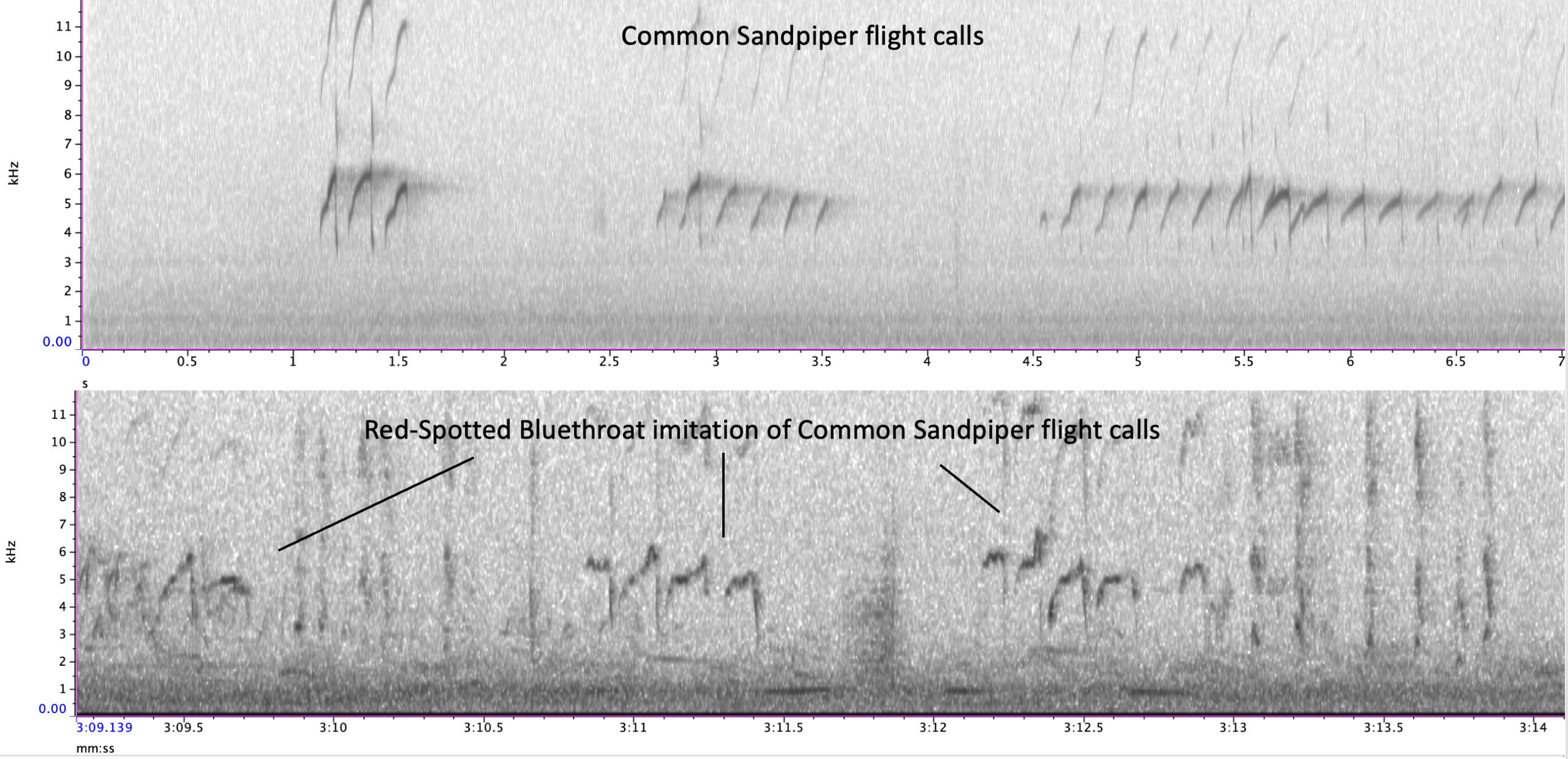
Finally, yesterday we explained that a few days ago we had deployed a static sound recorder close to the area the Red-spotted Bluethroat had been hanging out in the hope we were able to sound record the songs, calls and notes it had been performing in recent days. Bluethroat are a fascinating species, not only because of their stunning plumage, but the incredible repertoire they can concoct. Bluethroat are well known mimics and as they crystallise their main song during the very late winter and early spring, they ‘steal’ multiple songs and calls from a whole range of species they’ve encountered either on their breeding/natal sites, their migration routes or their over-wintering sites. This means they have the opportunity to copy a massive range of species to help develop and evolve their own songs over a period of years, which in turn will aid their success in attracting a mate. The Swineham Bluethroat was recently heard ‘singing’, however the noises this bird is putting together is technically ‘plastic’ song. The word plastic refers to the pliable, plasticity of the notes used, and as you’ll hear in the example below, isn’t a full, loud, clear song, rather a mash up of clever mimicry, a few clear Bluethroat calls and quieter mumbled notes. If this bird has over-wintered in Poole Harbour (rather than Southern Asia, India and Pakistan which is where it’s supposed to be), there’s a good chance this bird may have been sub-singing all winter, which is an even weaker and quieter version of plastic song. Below we’ve highlighted several of the imitations it has been performing, and in some examples provided a comparison of ‘the real thing’ from the actual species it’s copying. Red-spotted Bluethroat breed in Arctic Tundra areas from Northern Scandinavia, right across Northern Russia and into Western Alaska, and whats interesting about the Swineham bird is that part of it’s ‘song’ includes calls from birds it must have heard in Summer/Autumn on it’s breeding/natal site or whilst on it’s migration south as you’ll see and hear in the examples below.
In terms of ‘whats next’ for this bird, chances are it’s going to stick around for a week or two longer, evolving and crystallising it’s song, before instinct kicks in and it will begin it’s northward migration back to it’s breeding grounds wherever that may be. We’d also like to say a huge thanks to Mark Constantine and Magnus Robb from the Sound Approach for providing their input and example recordings to highlight and compare the examples of mimicry.
The first recording below is a long section of plastic song from the Swineham Bluethroat on the morning of April 14th. If you listen carefully, in the first few seconds you’ll hear some distant Eurasian Curlew which the Bluethroat imitates almost immediately, quickly followed by a Blue Tit call and then a set of Swallow and Goldfinch sounds. Of note, there is a rather vocal (distant) Sedge Warbler, a close Chaffinch and an even closer Cetti’s Warber which definitely aren’t the Bluethroat).
Other imitations in this recording include:
0.42 – 0.44 – Nuthatch
1.20 – 1.25 – Water Rail
1.32 – 1.36 – Swallow
1.38 – 1.52 – Siskin
2.09 – 2.21 – Long-tailed Tit
Here are a series of examples we’ve cut from other periods during the morning of April 14th where we’ve highlight the call type it’s copying from Bohemian Waxwing, Brambling and Common Sandpiper, whilst providing ‘real’ examples of each species too.
You might also like...
Harbour Update – 25/08/26
Nice to see the 1 Glossy Ibis is still around, being seen this morning from our Osprey Cruise…
Find out moreHarbour Update – 24/08/26
A more blustery day in the harbour, but still bringing plenty of good birding. In the Middlebere/Hartland scrub…
Find out moreCall 01202 641 003
© 2026 Birds of Poole Harbour Registered Charity No. 1152615